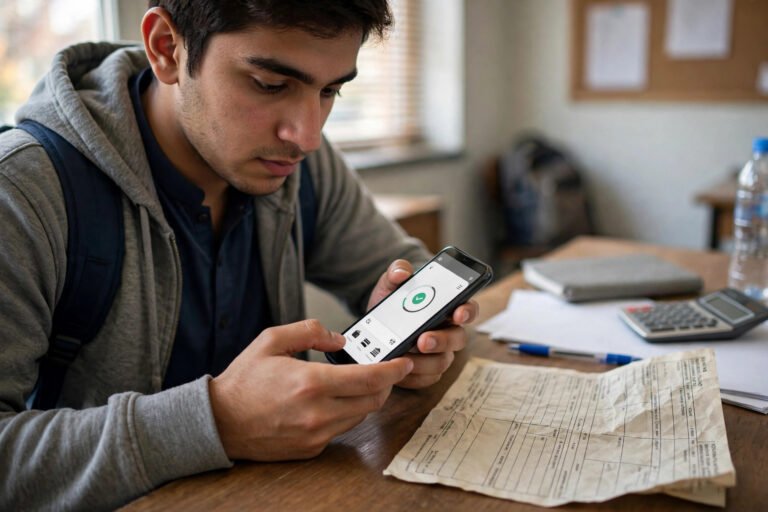
PTE Academic Preparation for Pakistani Students: Pattern, Scores and Study Plan
PTE Academic is a computer-based English language test that many universities and immigration authorities abroad accept. For Pakistani students who plan to study in an English-speaking country, PTE Academic is one of the tests that can show a university that your English is strong enough for academic study. This guide explains what PTE Academic is, how the test is organised, how scores work in general terms, and how to prepare for it with a clear study plan.
One point must be made clearly at the start. Test dates, test centres, fees and score requirements are announced by the official PTE body for each test session, and no date, fee or score figure is stated in this guide. The exact pattern, the test format on offer and the fee for a session are published in the official information for that session. Any date, fee or score figure you see on social media or a random website should be treated as a rumour until the official body confirms it in its own announcement. Universities also set their own English language requirement, so always check the requirement of the university you are applying to.
Quick Facts
| Item | Detail |
|---|---|
| Test | PTE Academic, a computer-based test of English for academic purposes |
| Who takes it | Students whose first language is not English and who plan to study abroad |
| Skills tested | Speaking, writing, reading and listening in English |
| Format | Fully computer-based, taken at an official test centre |
| Official source | The official PTE body and its official website and test centre information |
| Dates, fees and scores | Announced by the official PTE body for each session; no date, fee or score figure is stated in this guide |
What PTE Academic Is and Who Needs It
PTE Academic stands for Pearson Test of English Academic. It measures how well a person can use English in an academic setting, such as in university lectures, seminars, textbooks and written assignments. The whole test is taken on a computer at an official test centre. You read on screen, listen through headphones, speak into a microphone, and type your written answers on a keyboard.
Pakistani students usually need PTE Academic when they apply to a university abroad that accepts it. Some universities accept PTE Academic, some accept another English test, and some accept more than one test. Before you book a test, check the admission pages of the universities on your list and note which test each one accepts. Do not book a test before you know that the universities you want to apply to accept it.
The PTE Academic Test Pattern in General Terms
PTE Academic tests four skills: speaking and writing, reading, and listening. The test is taken in one sitting at a test centre, and the parts follow one after another in the order set by the official PTE body. The exact order, the number of tasks in each part and the time allowed are set by the official body and are announced for each version of the test, so this guide does not state them.
The speaking and writing part asks you to speak into a microphone and to type written answers. Speaking tasks include reading a text aloud, repeating a sentence you hear, describing an image, and answering a question in a few words. Writing tasks include writing a summary of a passage and writing an essay on a given topic. Your spoken answers are recorded, and your written answers are typed on the computer.
The reading part gives passages on screen and asks questions about them. Some tasks ask you to fill in missing words, some ask you to put paragraphs in the right order, and some ask you to choose the best answer from the options given. The passages are written in academic English, so they use formal vocabulary and long sentences. The skill being tested is understanding of an academic text, not memory of facts.
The listening part plays recordings of lectures and conversations through headphones. Some tasks ask you to write down a sentence you hear, some ask you to fill in missing words in a written text while you listen, and some ask you to choose the best answer. The recordings use natural spoken English, and you hear each recording once in most tasks, so careful listening and quick note-taking matter a great deal.
How PTE Academic Scores Work
Each of the four skills in PTE Academic receives its own score, and the section scores are combined into an overall score. The exact score scale is set by the official PTE body and is published in its official information. This guide does not state any score figure, because the scale and the way scores are reported are matters for the official body to announce.
There is no single passing score for PTE Academic that applies everywhere. Each university sets its own minimum overall score, and some universities also set a minimum score for a particular skill, such as writing or speaking. A score that meets the requirement of one university may fall short of the requirement of another. Always check the requirement of each university on your list, and aim for a score above the highest requirement among them.
How to Register and What Happens on Test Day
Registration for PTE Academic is completed through the official PTE system. Follow these steps when you are ready to book:
- Open the official PTE website and read the current information for test takers in Pakistan. Confirm the test format on offer and the list of test centres.
- Create an account on the official system, or sign in if you already have one. Enter your name exactly as it appears on your passport or national identity card, because the name on your registration must match your identity document.
- Choose a test centre and a test date from the dates announced for that session. Book early, because popular centres and dates fill up, and a late booking may leave you with a centre far from home.
- Pay the test fee through the payment method the official body accepts. Keep the payment receipt safe. Your booking is not complete until the fee is paid, so do not leave this step until the last day.
- Read the test day instructions carefully. Note the reporting time, the identity document you must bring, and the items you are not allowed to take into the test room.
- On test day, arrive early with your original identity document and your confirmation details. Follow the instructions of the test centre staff, and do not take any unauthorised item into the test room.
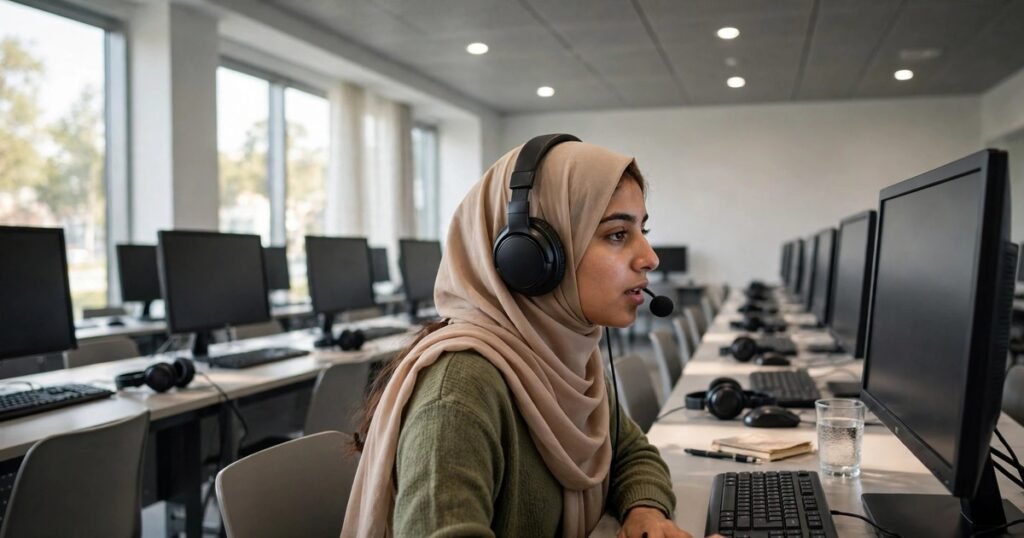
On test day, you will sit at a computer for the whole test. You will wear headphones for the listening part and speak into a microphone for the speaking part. Other candidates in the same room will be speaking at the same time, so practise speaking clearly and staying focused on your own screen. If you face a technical problem during the test, raise your hand and tell the test centre staff at once, rather than waiting until the test ends.
A Practical PTE Academic Study Plan
A good PTE Academic study plan works in phases. The first phase is to learn the pattern of the test and to find your weak areas. The second phase is to build each skill, one at a time, with daily practice on a computer. The third phase is to practise under test conditions and to fix the mistakes that keep appearing. The length of each phase depends on your starting level and on how much time you can give each day, so set your own dates and work to them.
Begin with a full practice test taken on a computer under quiet conditions, using official practice material. Mark it honestly and note which part was hardest for you. That result tells you where to spend most of your time. A student who is weak in listening should spend more time on listening practice, while a student who is weak in writing should spend more time on typing and writing practice. Do not spend equal time on every part if your needs are not equal.
In the final phase, take full practice tests on a computer under timed conditions, in one sitting, without breaks beyond those in the test pattern. Practise speaking into a microphone while other people are speaking nearby, so that the noise of a real test centre does not distract you. After each practice test, review every mistake and write down what caused it, so that the same mistake does not repeat.
How to Prepare for Speaking and Writing
Speaking in PTE Academic is speaking into a microphone at a computer, and fluency and clear pronunciation matter. Practise reading a text aloud at a natural pace, without long pauses. When you repeat a sentence you hear, listen to the whole sentence first and then repeat it in a steady voice, keeping the word order and the main words correct.
Writing in PTE Academic is typing on a keyboard, so typing speed and accuracy are part of the test. Practise typing your essays and summaries on a computer, and check your spelling as you type. For the essay task, plan your answer before you write. Write down your main point, the reasons that support it, and an example for each reason. Then write in paragraphs, with one main idea in each paragraph.
How to Prepare for Reading
Reading for PTE Academic is academic reading on a screen, so the best practice is to read academic English on a computer regularly. Read articles from science, history, art and social science, and practise finding the main idea of each paragraph. After reading a passage, ask yourself what the writer is arguing and what evidence the writer gives.
How to Prepare for Listening
Listening is often the hardest part for Pakistani students, because classroom English is usually read, not heard. The remedy is daily listening to natural spoken English. Listen to university lectures, talks and interviews, and practise taking notes while you listen. Your notes should record the main ideas and the key details, not every word.
Common Mistakes to Avoid
The most common mistake is preparing for only one or two skills and ignoring the rest. A strong reading score does not make up for a weak speaking score if the university you want requires a minimum in speaking. Give time to all four skills, and give extra time to your weakest skill.
The second common mistake is practising only on paper when the real test is on a computer. If you practise reading on paper and writing by hand, the computer test will feel strange on test day. Do most of your practice on a computer, with headphones and a microphone, so that the real test feels familiar.
The fourth mistake is ignoring time management. Each part of the test has a time limit set by the official body, and students who spend too long on one task lose marks on the tasks they never reach. Practise under timed conditions from the start, so that the pace of the real test feels familiar.
If you are also considering other English tests, our IELTS preparation guide explains how IELTS is organised and how to prepare for it, so that you can compare the two tests before you choose. Our entry test preparation plan explains how to organise your revision over the weeks before any test. Our SAT preparation guide for Pakistani students is useful if you are also preparing for university admission tests abroad.
How long should I prepare for PTE Academic?
There is no fixed preparation time that suits every student. A student with strong English and good computer skills may need a short period of practice to learn the test pattern, while a student with weaker English may need a longer period to build the four skills. Take a practice test at the start, set a target based on the requirement of your chosen universities, and plan your preparation around the gap between your starting level and that target.
Which is better for me, PTE Academic or IELTS?
Neither test is better in itself. The right choice depends on which test the universities you are applying to accept, and on which test format suits you. PTE Academic is fully computer-based and tests speaking into a microphone, while IELTS has a different format. Check the requirements of your universities first, and then choose the test you are more comfortable with.
Can I take PTE Academic more than once?
Yes, you can take PTE Academic again if you are not happy with your score. The official body announces the rules for retaking the test, including any waiting period between attempts. Before you retake it, study your score report to see which skill was weakest, and spend your preparation time on that skill.
Closing Note
PTE Academic preparation is a steady process, not a last-minute effort. Learn the pattern of the test, practise all four skills on a computer every week, use official practice material, and take full practice tests under timed conditions before you book the real test. A good PTE Academic score opens the door to universities abroad, and the English skills you build while preparing will help you in your studies once you get there.
Academic honesty note: prepare for PTE Academic with your own study and your own practice, and sit the test yourself. Never pay anyone who promises a guaranteed score, a leaked paper or a fake score report, and trust only the official PTE body for test dates, fees, test centres and score information.
A Final Checklist
Before test day, confirm your booking, your identity document, and your test centre. A complete file and a clear plan help you arrive calm and ready for the computer-based exam. Read the test day instructions once more so you know the reporting time and the documents to carry.
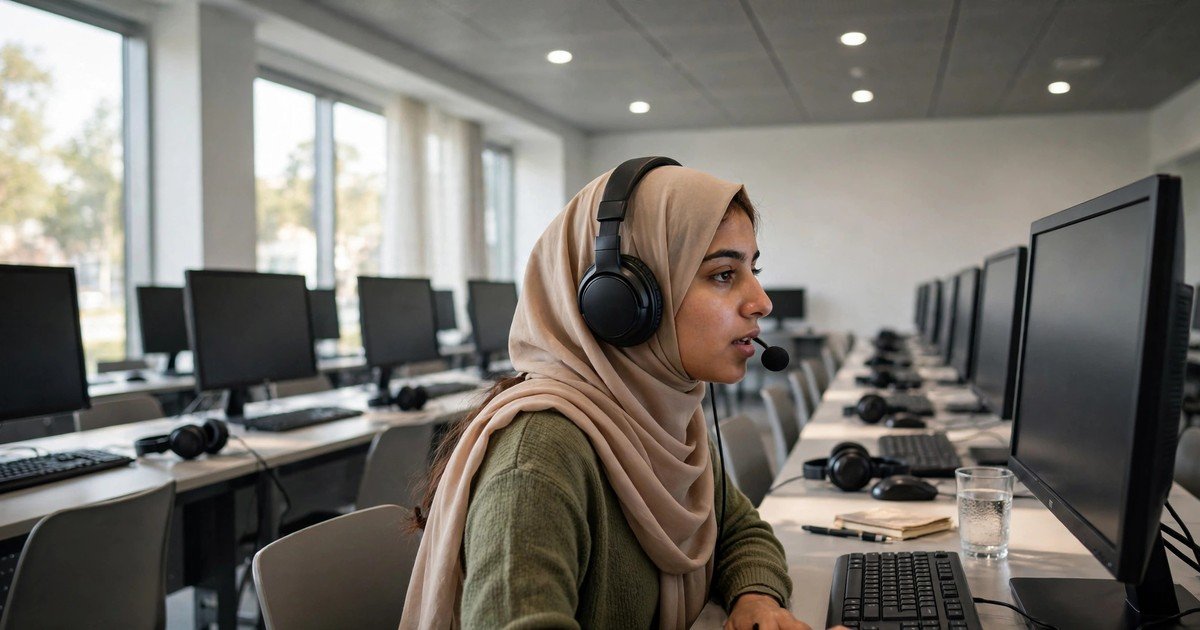
Revise the speaking, writing, reading, and listening tasks in the final week. A steady routine and timed practice help you use your English with confidence on the day. Practise on a computer so the format feels familiar when the exam begins.

Practise daily, stay calm, and give your best in every section.
Related guides: IELTS preparation guide and TOEFL preparation guide for Pakistani students.