
IELTS Preparation: Bands, Sections and a Simple Study Plan
The IELTS, the International English Language Testing System, is the most widely accepted English language test in the world. It is required for study, work and migration in the United Kingdom, Canada, Australia, New Zealand and many other countries, and it is also accepted by a growing number of universities in the United States. For Pakistani students and professionals, a good IELTS score is often the key that opens the door to study abroad. This guide explains the four sections of the IELTS, how the band scores work, how to prepare for each section, and how to build a study plan that works. IELTS preparation begins with understanding the test format, and this guide walks you through it step by step.
One point must be made clearly at the start. The IELTS is administered by the British Council, IDP and Cambridge, and the test format, the registration process and the test dates are announced by the test providers for each cycle. No fee or date figure is stated in this guide, because fees and dates change and are set by the test providers. Always read the official information from the British Council or IDP before you register.
Quick Facts
| Item | Detail |
|---|---|
| Test | IELTS — International English Language Testing System |
| Administered by | British Council, IDP and Cambridge |
| Sections | Listening, Reading, Writing and Speaking |
| Band scale | 0 to 9, with 9 as the highest band |
| Main types | Academic, for study, and General Training, for work and migration |
| Official source | The British Council and IDP websites and the official IELTS information |
| Dates and fees | Announced by the test providers for each cycle; no fee or date figure is stated in this guide |
IELTS at a Glance: Sections, Timing and Questions
| Section | Time | Questions | What it tests |
| Listening | 30 min | 40 questions | 4 recordings |
| Reading | 60 min | 40 questions | 3 passages |
| Writing | 60 min | 2 tasks | Task 1: 150+ words; Task 2: 250+ words |
| Speaking | 11-14 min | 3 parts | Interview, talk and discussion |
How the IELTS Band Scores Work
The IELTS is scored on a band scale from 0 to 9, with 9 as the highest band. Each of the four sections — Listening, Reading, Writing and Speaking — receives its own band score, and the overall band score is the average of the four. A band score is not a pass or fail mark; it describes your level of English. A band 9 means an expert user, a band 7 means a good user, a band 6 means a competent user, and lower bands describe more limited ability.
Different universities and organisations ask for different band scores. Most universities ask for an overall band in the good to very good range, and many also ask for a minimum band in each section, so that a weak section cannot be hidden by a strong one. Before you prepare, find out exactly what score your university, employer or visa authority requires, including any minimum for each section, and set your target from that.
There are two types of IELTS: Academic and General Training. The Listening and Speaking sections are the same in both, but the Reading and Writing sections differ. The Academic test is for people who want to study at university. The General Training test is for people who want to work or migrate. Make sure you register for the right type, because the wrong type will not be accepted for your purpose.
What Each IELTS Band Means
The table below explains bands 5 to 9 in plain English. Your overall band is the average of the four section bands, so a weak section pulls your overall band down.
| Band | What it means |
| 5 | Modest user: can use English in familiar situations, but makes frequent mistakes |
| 6 | Competent user: uses English fairly well, with some mistakes and misunderstandings |
| 7 | Good user: uses English well in most situations, with some errors |
| 8 | Very good user: uses English well, with only a few small errors |
| 9 | Expert user: uses English fully and accurately in almost every situation |
What Band Score Do You Need?
The band you need depends on your goal. Most undergraduate programmes ask for an overall band of 6.0 to 6.5, while most postgraduate programmes ask for 6.5 to 7.0, and many universities also set a minimum band for each section, so a strong overall score cannot hide a weak section. Always check the exact requirement on the university website before you book your test, because the same university can ask for different bands for different courses.
For work and migration, the bar is often higher, and many routes commonly ask for 7.0 or above. The figures in the table below are typical requirements only, so use them to set your target and then confirm the exact band your university, employer or visa authority asks for.
| Goal | Typical overall band |
| Undergraduate study | 6.0-6.5 overall |
| Postgraduate study | 6.5-7.0 overall |
| Work and migration | Commonly 7.0+ |
These are typical requirements. Confirm the exact band your university, employer or visa authority asks for before you plan your study.
scholarships in the UK for Pakistani students can help with the cost of studying abroad, so check the band your chosen university asks for before you apply.
Chevening Scholarship guide explains one of the best-known funded routes for Pakistani students, and its English requirement is another reason to aim for a strong IELTS band.
The Four Sections of the IELTS
The Listening section has four recordings, which become harder as the test goes on. You hear each recording once, and you answer questions about it while you listen. The recordings cover everyday conversation, a talk on a general topic, an academic discussion and an academic lecture. The challenge is to listen, understand and write your answers at the same time, under time pressure.
The Reading section has three passages, with questions about each one. In the Academic test, the passages are taken from books, journals and magazines. The questions test whether you can find specific information, understand the main idea, follow an argument, and work out the meaning of a word from its context. Time pressure is the main difficulty: you must read quickly and answer accurately.
The Writing section has two tasks. In the Academic test, the first task asks you to describe a chart, graph, table or diagram, and the second task asks you to write an essay in response to a question or a point of view. In the General Training test, the first task is a letter, and the second is an essay. The writing is marked on how well you answer the task, how coherent and well organised your writing is, the range of your vocabulary, and the accuracy of your grammar.
The Speaking section is a face-to-face interview with an examiner, in three parts: a short introduction and questions about familiar topics, a short talk on a topic you are given, and a longer discussion. It tests whether you can speak fluently, use a good range of vocabulary and grammar, and express your ideas clearly. Many candidates find speaking the most stressful section, because it is the only one where you cannot hide behind a written answer.
IELTS Preparation: How to Prepare for Each Section
Good preparation for the IELTS takes several months, and it should cover all four sections, not only your weakest one. Start by taking a full practice test, so that you know your starting level in each section, and then build your plan around the result. A strong IELTS score can also help you win funding, as our scholarships for Pakistani students guide explains. In IELTS preparation, balance matters more than total hours: work on listening, reading, writing and speaking every week.
- Listening: listen to English every day — news, podcasts, lectures and conversations. Practise with official IELTS listening tests, and learn to take notes while you listen. Pay attention to spelling, because a correctly heard answer with a spelling mistake is marked wrong.
- Reading: read English every day — newspapers, magazines, academic articles and books. Practise skimming for the main idea and scanning for specific information, because you do not have time to read every word slowly.
- Writing: write every week, and have your writing checked by a teacher or an experienced speaker. Practise both tasks, learn the structure of a good essay, and build a range of vocabulary for common topics. Do not memorise whole essays; examiners can recognise them, and they do not score well.
- Speaking: speak English every day, even if only for a few minutes. Talk to a friend, record yourself answering practice questions, and listen to your own speech. Practise the three parts of the speaking test, and learn to speak for the full time in the long turn without stopping.
- Take full-length mock tests regularly, under real conditions, and review every mistake. A mock test shows you where you are weak and how fast you work.
- Learn vocabulary in context, by reading and listening, not by memorising long lists. Words learned in context are easier to remember and easier to use correctly.
The British Council and IDP provide free official practice material, and this is the best preparation available, because it is written by the same organisations that write the real test. Use it first, before any other material. A good preparation book can help with strategy and extra practice, but the official material should be the centre of your preparation.
Know how you are marked. In Writing, the criteria are task achievement, coherence and cohesion, lexical resource, and grammatical range and accuracy. In Speaking, they are fluency, vocabulary, grammar and pronunciation. Practise against them: check each essay for a clear answer, linking words and varied sentences, and record your speaking to check fluency, vocabulary and pronunciation.
PTE preparation guide for Pakistani students is a useful comparison if you are deciding between IELTS and PTE, because many Pakistani students consider both tests before choosing one.
The Writing Section: The Key Challenge
For most Pakistani candidates, the Writing section is the hardest part of the IELTS, and it deserves the most preparation time. The difficulty is not the ideas; it is expressing them in clear, correct and well-organised English under time pressure.
The first writing task in the Academic test asks you to describe data, and many candidates lose marks because they simply list the numbers without describing the main trends. Learn to identify the most important features of a chart or graph — the highest and lowest values, the main changes, and the overall pattern — and to describe them clearly, with comparisons. Do not write about every detail; write about the features that matter.
The essay task asks you to answer a question, discuss a point of view, or give your opinion. Learn the structure of a good essay: an introduction that states your position, body paragraphs that each make one clear point with an example, and a conclusion that summarises your argument. Practise writing essays on common topics — education, technology, health, the environment, work — and have them checked, so that you learn from your mistakes.
The Speaking Section: Speak With Confidence
Practise the three parts separately. For the first part, prepare short, natural answers about familiar topics: your home, your work, your studies, your hobbies. For the second part, the long turn, practise speaking for two minutes on a topic, using the one minute of preparation time to plan your points. For the third part, the discussion, practise giving your opinion on more abstract questions, and supporting it with reasons and examples.
Record yourself and listen to your own speech. You will hear the pauses, the repeated words, and the grammar mistakes that you do not notice while you are speaking. Correcting these habits takes time, but it is one of the fastest ways to raise your speaking band. Speak English whenever you can — with friends, with family, or even to yourself — because fluency comes from practice, not from study alone.
A 30-Day IELTS Preparation Study Plan: Week by Week
A 30-day plan works best when it is built around a diagnostic test, section skills and timed practice. Start by finding your current band, then work on your weakest section first and finish with full mock tests under real test conditions. Study for 2 to 4 hours a day, and keep a short error log of every mistake so you can see what to fix next. IELTS preparation in this plan is built around one diagnostic test, then section skills, then timed practice.
Each week has one main job, and the work builds on the week before it. In the first week, learn how each section is timed and marked, and find out which section costs you the most marks. In the second week, practise the skills for each section, and learn the structures for Writing Task 1 and Task 2. In the third week, work against the clock, because timing is where many candidates lose marks. In the final week, practise the whole test as one sitting, so its length and pressure feel familiar on test day.
| Week | Focus | What to do |
| Week 1 | Diagnostic and format | Take a diagnostic test, learn the format and timings, and set a target band |
| Week 2 | Section skills and Writing structures | Practise each section daily and learn essay and Task 1 structures |
| Week 3 | Timed drills and error log | Do timed section drills, review every mistake and repeat weak question types |
| Week 4 | Full mock tests under real conditions | Take full mock tests, time yourself strictly and review the results |
Be honest about what four weeks can do. Most candidates gain 0.5 to 1 band in 4 weeks of steady study, and beginners who need a larger gain should plan for 2 to 3 months. A short plan still helps: it shows you the format, builds stamina and makes your weak areas clear, but it cannot replace the basics if your English level is still low. Even a small gain shows that steady IELTS preparation pays off over four weeks.
Common Mistakes to Avoid
The most common mistake is memorising model answers, especially for writing and speaking. Examiners can recognise memorised answers, and they do not score well. Learn the structure and the vocabulary, but always answer the question in your own words.
The second mistake is practising only with unofficial material. Unofficial tests are often easier or harder than the real IELTS, and they can teach you the wrong habits. Use the official British Council and IDP practice tests as your main material.
The third mistake is ignoring spelling and grammar in the Listening and Reading sections. A correct answer with a spelling mistake is marked wrong, and careless grammar in writing costs you marks. Check your spelling and grammar in every practice test, and build the habit of checking before you move on.
The fourth mistake is taking too few full-length practice tests. The IELTS is a long test, and stamina matters. Students who have never sat a full test often lose concentration in the later sections. Practise the full test at least a few times before the real one.
What band score do I need for IELTS?
It depends on your purpose. Most universities ask for an overall band in the good to very good range, and many also ask for a minimum band in each section. Find out exactly what your university, employer or visa authority requires, including any minimum for each section, and set your target from that.
Should I take Academic or General Training IELTS?
Take the Academic test if you want to study at university, and the General Training test if you want to work or migrate. The Listening and Speaking sections are the same in both, but the Reading and Writing sections differ. Make sure you register for the right type, because the wrong type will not be accepted for your purpose.
How long should I prepare for the IELTS?
Most candidates prepare for several months. Take a diagnostic test first to find your starting level in each section, then study every day, with extra time for your weakest section. Candidates who are weak in writing or speaking usually need more time than those who are weak only in listening or reading. For most people, IELTS preparation takes several months of steady study.
Can I prepare for the IELTS without joining an academy?
Yes. The British Council and IDP provide free official practice material, and many candidates prepare on their own using this and a good preparation book. An academy can provide structure, feedback on writing and speaking, and practice, but it is not a substitute for your own daily use of English. Many candidates complete their IELTS preparation at home using free official practice material.
How can I improve my speaking band quickly?
Speak English every day, record yourself, and listen to your own speech. Practise the three parts of the speaking test, learn to speak for the full time in the long turn, and correct the habits you hear in your recordings. Fluency comes
from practice, and even a few minutes of speaking every day makes a real difference.
Can I prepare for IELTS in one month?
Yes, if you are already around band 5.5 or 6 and can study for 2 to 4 hours a day. In one month, focus on the test format, timed practice and your weakest section, and take full mock tests in the final week. A full band gain in four weeks is possible only if your basics are already solid; if you are starting from a lower level, plan for a longer preparation period instead of rushing the test.
How many hours a day should I study for IELTS?
Aim for 2 to 4 hours a day, with your weakest section first. A short, focused session every day works better than long, irregular study. Use the time for timed practice, reviewing mistakes and speaking aloud, and take one full mock test each week so your practice stays close to real test conditions.
Closing Note
The IELTS is a fair test: it rewards candidates who use English every day, in all four skills, and who prepare with the official material under real conditions. Start early, find out the band score you need, and build a daily habit of listening, reading, writing and speaking. Give the Writing section the time it deserves, practise speaking with confidence, and take full-length mock tests until the format feels familiar. Good IELTS preparation turns daily English use into a higher band score.
Academic honesty note: register only through the official British Council or IDP process, and never pay anyone who promises a leaked paper, a guaranteed band, or a certificate for money. Prepare with your own honest study, and trust only the official information from the British Council and IDP for dates, fees and registration.
IELTS Preparation: Your Listening Plan
Good IELTS preparation starts with listening every day, because the listening section rewards ears that are used to real English. IELTS preparation for listening means hearing different accents, following a conversation without a transcript, and writing answers while the recording is still playing. Practise with a short news clip or a podcast each morning, note the main idea in one line, and then listen again for the numbers and names. That daily habit, kept for a month, is the heart of strong IELTS preparation.
Do not pause the recording while you practise, because the real test will not pause for you. IELTS preparation works best when you train under real conditions, with one hearing only, a pencil in hand and an answer sheet beside you. IELTS preparation also means learning to spell names, dates and numbers correctly, because a correct answer with a spelling error earns no mark. After each practice, check your answers, read the transcript for the parts you missed, and note the words that caused trouble.

IELTS Preparation: Your Reading and Writing Plan
For reading, IELTS preparation means learning to find answers quickly, not reading every word. IELTS preparation for reading should teach you to skim a passage for its structure, scan for names and numbers, and then read the few lines around each answer. Practise with one passage a day, time yourself, and write the time beside your score. IELTS preparation that tracks time in this way shows you whether you are getting faster, and speed is what turns a good reader into a high band scorer.
For writing, IELTS preparation means writing every day, even if it is only one paragraph. IELTS preparation for writing Task 1 should give you a clear way to describe a chart in four short paragraphs, and IELTS preparation for Task 2 should give you a clear way to answer a question with an introduction, two main points and a conclusion. Write by hand if your test is on paper, time each task, and ask a teacher or a fluent friend to mark one essay a week.
IELTS Preparation: Your Speaking and Mock Test Plan
For speaking, IELTS preparation means speaking out loud every day, not just thinking in English. IELTS preparation for speaking should include short answers about your life, a two-minute talk on a topic card, and a discussion where you give reasons for your opinion. IELTS preparation works best when you record yourself, listen for pauses and repeated words, and then try the same answer again more smoothly. A few minutes of speaking every day, kept up for a month, will lift your fluency more than any single lesson.
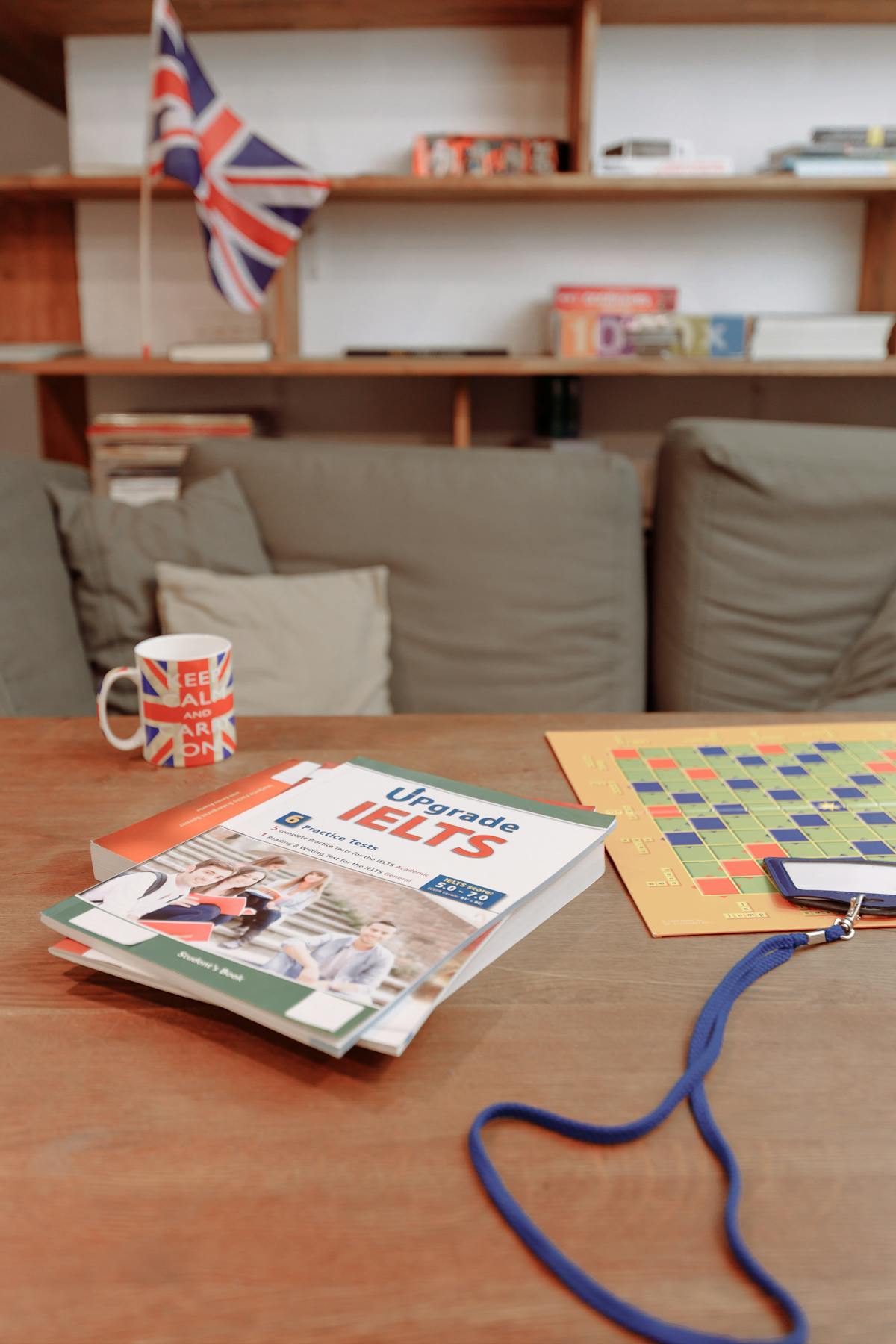
Take full mock tests in the last two weeks, because IELTS preparation without a mock test leaves you unready for the length of the real test. IELTS preparation with mock tests should copy the real day: listening, reading and writing in one sitting, with the same timings and no breaks in between. IELTS preparation after a mock test means reviewing every mistake, writing the correct answer beside it, and adding the weak topic to your plan. A mock test is not a judgement; it is a map of what to fix next.
IELTS Preparation: Your Next Steps
Your next step is simple: take a diagnostic test today, find your weakest section, and start your IELTS preparation there. IELTS preparation works best when you study your weakest section first, for two to four hours a day, and track your scores each week. IELTS preparation should also include official practice material, because only official tests show the real question styles. Book your test only when your mock scores are close to your target band, so the fee buys a result, not a lesson.

For more study help, read the PTE preparation guide if you are comparing English tests, and browse past papers on PakUni for other study plans. For official test information, sample questions and booking, check the official IELTS website, because only IELTS can confirm test dates, fees and formats. Keep this habit with IELTS preparation: practise a little every day, test yourself weekly, and let each IELTS preparation week move you closer to your target band.
Keep this habit with IELTS preparation: listen, read, write and speak every day, and let IELTS preparation become part of your routine. IELTS preparation rewards steady work more than any single book, and IELTS preparation done in this way turns a long study plan into small, finished steps. Start today, keep your record, and let each IELTS preparation week bring your target band closer.
Keep going with IELTS preparation, one section at a time. IELTS preparation rewards steady work, and IELTS preparation done a little every day will take you to your target band.