Study in Thailand for Pakistani Students: Fees, Visa and Universities
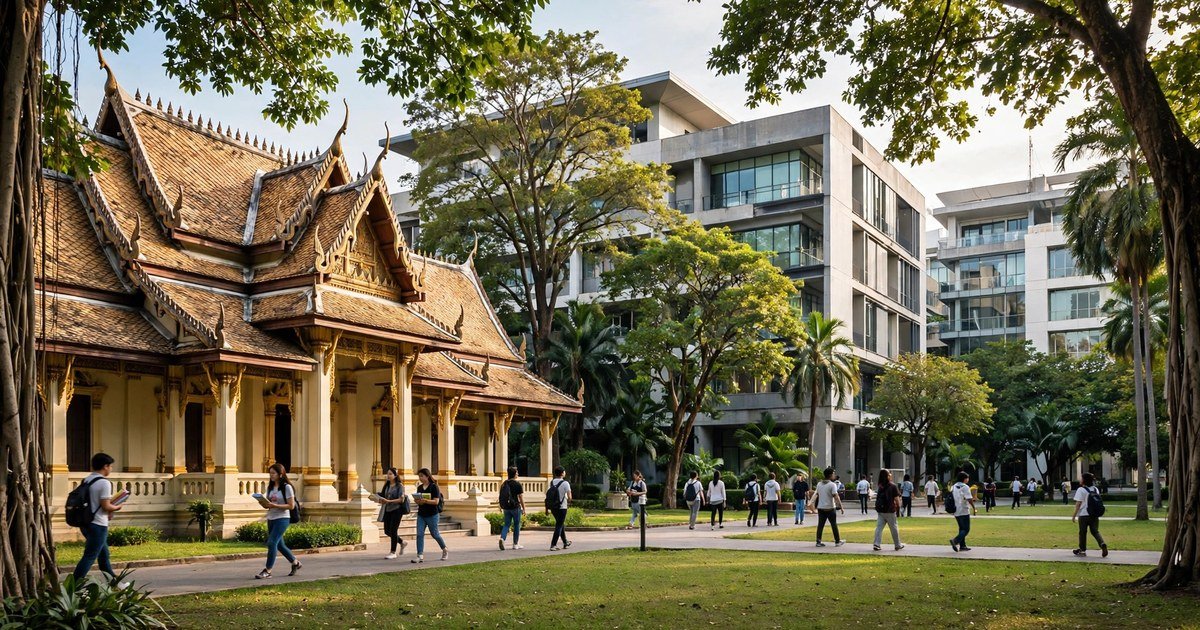
Thailand is becoming a popular study destination for Pakistani students who want an affordable international degree in Asia. Its universities offer English-taught programmes in business, engineering, medicine, hospitality, science and the social sciences, and living costs are lower than in many other study destinations. Bangkok is a lively and modern capital, and the country is known for friendly people, good food and a warm climate. For students who want to study abroad without the high costs of the West, study in Thailand is well worth considering.
This guide explains how Pakistani students can study in Thailand: which universities to consider, what admission usually requires, how scholarships work, how the student visa process works, and what life as a student is like. It is written for students and parents who are planning ahead and want a clear picture before they apply.
One point must be made clearly at the start. For study in Thailand, tuition fees, scholarship terms, visa fees and application deadlines differ between universities and change from year to year, and no fee, cost or deadline figure is stated in this guide. The exact fee for your programme, the scholarship conditions and the last date to apply are published by the university and by the Thai authorities for the intake you apply to. Any fee or deadline figure you see on social media or on an unofficial website should be treated as a rumour until the university or the official authority confirms it.
Quick Facts
| Item | Detail |
|---|---|
| Destination | Thailand, mainly Bangkok, with universities also in Chiang Mai, Khon Kaen and other cities |
| Language of study | English in international programmes; Thai in many local programmes |
| Popular levels | Bachelor, master and PhD programmes, with scholarships for selected international students |
| Well-known universities | Chulalongkorn University, Mahidol University, Thammasat University, King Mongkut’s University of Technology Thonburi, Chiang Mai University, Kasetsart University, Asian Institute of Technology |
| Scholarships | University and Thai government scholarships for strong international students, with terms set for each intake |
| Student visa | Non-immigrant education visa, applied for after admission at the Thai embassy or consulate in Pakistan |
| Fees, deadlines and visa charges | Set by each university and by the Thai authorities for each intake; no fee or deadline figure is stated in this guide |
| Official sources | The university’s official website and the Thai embassy and government portals for study and visas |
Why Pakistani Students Choose to Study in Thailand
The first reason Pakistani students choose to study in Thailand is affordability. Tuition fees and living costs in Thailand are lower than in the United Kingdom, the United States, Australia or Singapore. University hostels, shared flats, local food and public transport are all reasonably priced, so a family with a modest budget can often manage a degree in Thailand. This makes it a realistic option for students who cannot afford the more costly destinations.
The second reason to study in Thailand is the range of English-taught programmes. Many Thai universities run international programmes taught entirely in English, in subjects such as business, engineering, computer science, medicine, hospitality and international relations. Pakistani students who have studied in English medium schools can follow these programmes without learning Thai first, although learning some basic Thai helps greatly in daily life.
The third reason is the quality of the leading universities. Chulalongkorn University and Mahidol University are the best-known universities in Thailand and rank well in Asia. Thammasat University is known for law, economics, political science and business. King Mongkut’s University of Technology Thonburi is known for engineering and technology. The Asian Institute of Technology, near Bangkok, is a well-known graduate school for engineering, technology and management with students from many Asian countries.
Universities for Study in Thailand
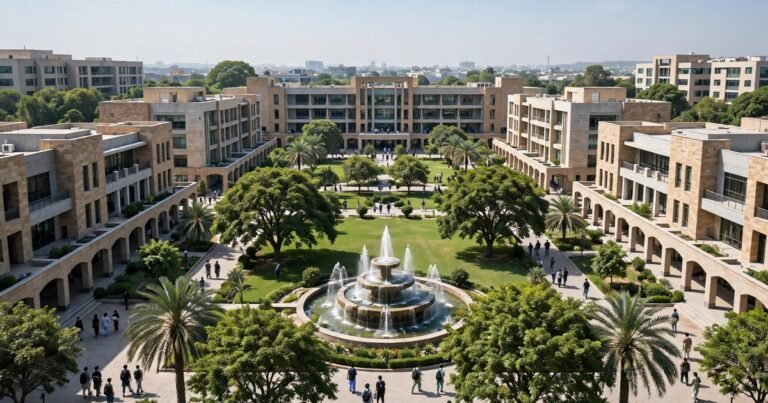
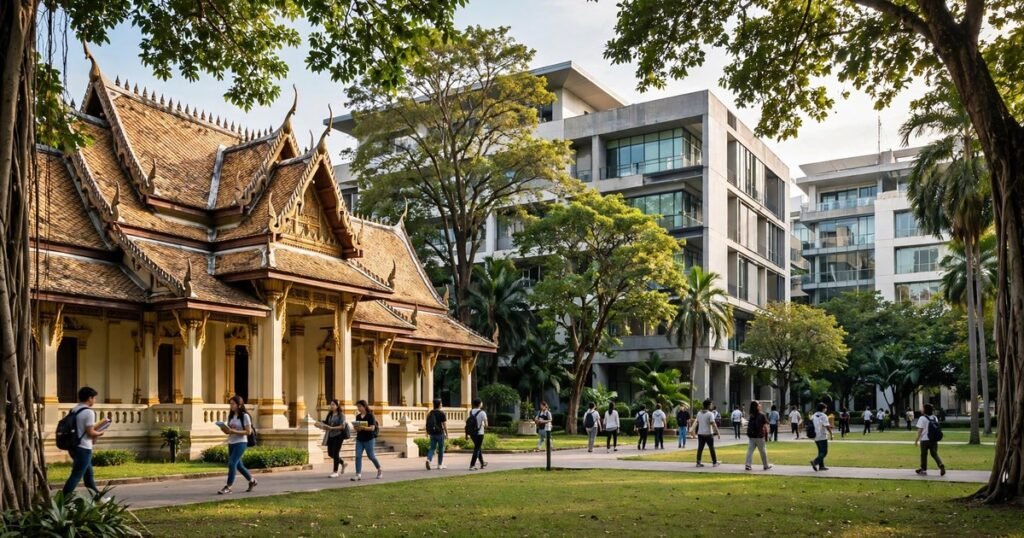
Chulalongkorn University, in central Bangkok, is the oldest university in Thailand and one of the most respected choices for study in Thailand. It offers international programmes in business, engineering, science, medicine, architecture, communication and the social sciences. Admission to its international programmes is competitive, and strong marks in intermediate or A Levels are expected.
Mahidol University, with campuses in Bangkok and nearby provinces, is known for medicine, dentistry, pharmacy, science, engineering and public health. Its international programmes attract students from across Asia, and its medical and science faculties are well regarded.
Thammasat University is known for law, economics, political science, business, journalism and social sciences, and it runs well-known international programmes in Bangkok. King Mongkut’s University of Technology Thonburi is known for engineering, science, technology and architecture. Chiang Mai University, in northern Thailand, is a large public university with programmes in medicine, science, engineering, agriculture and the humanities, and it is popular with students who prefer a quieter city.
Kasetsart University is known for agriculture, science, engineering and business. The Asian Institute of Technology offers master and PhD programmes in engineering, technology, management and the environment, and it has a strongly international student body. Private universities in Bangkok also offer international programmes in business, hospitality, media and design.
Admission Requirements for Study in Thailand
For a bachelor degree through study in Thailand, you normally need an intermediate qualification, usually FA or FSc, from a recognised board in Pakistan, or an equivalent qualification such as A Levels. Universities ask for your matric and intermediate certificates and marks sheets, and they look at your results in subjects related to your chosen programme. For example, engineering programmes expect strong marks in mathematics and physics, while business programmes expect strong marks in mathematics and English.
For a master degree, you normally need a bachelor degree in a related subject from a recognised university, with transcripts and a degree certificate. For a PhD, you normally need a master degree and a research proposal. Some programmes ask for a statement of purpose, recommendation letters or a CV, and some ask for an interview or an admission test.
English language proof is usually required for international programmes, often through IELTS or TOEFL, although some universities may accept proof that your previous education was in English. The required level differs between universities and programmes, so check the requirement for your programme before you book a test. Our IELTS preparation guide explains how to prepare for the test and plan your practice.
Some programmes, such as medicine and dentistry, have extra requirements, including specific intermediate subjects and an admission test or interview. Read the admission instructions for your programme carefully, and prepare from your own course books and from the syllabus the university publishes.
Scholarships for Study in Thailand
Scholarships for study in Thailand are available, and they are worth applying for. The Thai government offers scholarships for international students, and individual universities offer merit scholarships, tuition fee discounts and financial aid. Some scholarships cover tuition in full or in part, and a few also help with accommodation and living costs. The exact benefits and conditions are set for each intake, so read the scholarship announcement carefully.
Scholarship selection is based on academic merit, usually your matric, intermediate or bachelor results, together with the strength of your application and any test or interview. Strong marks, a clear statement of purpose and complete documents all help. Some scholarships are applied for at the same time as admission, while others have a separate application, so read the instructions carefully and note the closing date.
Pakistani students who want to study in Thailand should also check scholarships offered in Pakistan for study abroad, and our scholarships for Pakistani students guide explains the kinds of support that are available and how to apply. Never pay an agent who promises a scholarship for money; scholarships are awarded on merit through the official process, and no payment can secure one.
How to Apply for Study in Thailand
Applications for study in Thailand are made online through the university’s admission portal. Follow these steps when applications are open:
- Shortlist two or three universities and programmes that match your marks, your budget and your career plans. Read the entry requirements and the scholarship conditions for each programme on the official website.
- Prepare your documents: matric and intermediate certificates and marks sheets, a valid passport, a recent photograph, and an English language test result if required. Keep clear scanned copies ready before you start the application.
- Create an account on the university’s admission portal and fill in the online application form. Enter your name and date of birth exactly as they appear on your passport, because these details will also be used for your visa.
- Upload the documents asked for and pay the application fee through the payment method accepted by the portal, if a fee applies. Keep the payment receipt safe.
- If the university asks for an interview or an admission test, attend it on the given date. Some interviews are held online, which is convenient for students applying from Pakistan.
- Wait for the admission decision. If you receive an offer, read it carefully, note the conditions, and accept it within the time given. The university will then guide you on the visa process and the fee payment schedule.
Apply early for study in Thailand, because popular programmes fill up and visa processing takes time. Do not pay any agent who promises admission for money; apply through the official portal and contact the university’s admission office directly if you have a question.

Student Visa for Study in Thailand
Pakistani students need a non-immigrant education visa to study in Thailand. After admission, the university issues the documents you need to apply at the Thai embassy or consulate in Pakistan. The university’s international student office usually guides admitted students through the process, so follow its instructions rather than relying on advice from unofficial sources.
The usual steps are: receive an offer from the university, collect the admission letter and supporting documents from the university, submit the visa application at the Thai embassy or consulate with your passport, photographs and the university documents, and then complete the stay extension and reporting steps after you arrive in Thailand. Students in Thailand must report their stay and extend their visa as required, and the university will explain the process.
Keep your passport valid for well beyond your planned stay, and keep copies of your offer letter, fee receipts and visa documents in both paper and digital form. Visa rules can change, so always confirm the current requirements with the university and with the Thai embassy before you travel. Do not travel on a tourist visa with the plan of converting it into a student visa; use the proper education visa route from the start.
Fees and Living Costs for Study in Thailand
Tuition fees for study in Thailand differ between universities and programmes, and international programmes usually cost more than Thai-taught programmes. Medicine, dentistry and engineering usually cost more than arts or social science programmes. The exact fee for your programme is published by the university, and it is usually charged per semester or per academic year.
Living costs in Thailand are lower than in many other study destinations, and Bangkok is more costly than Chiang Mai or Khon Kaen. University hostels and shared flats are usually the cheapest accommodation, especially in the first year. Local food is inexpensive and widely available, and public transport in Bangkok, including the train and metro, is affordable. Students who cook at home and use public transport spend less than those who eat out every day.
Before you accept an offer, add up the full first-year cost: tuition, visa charges, accommodation, food, transport, books, health insurance and travel. Make sure your family can afford it, and check whether the university offers any scholarship, fee discount or instalment plan. Pay only through the university’s official payment channels and keep every receipt.
Common Mistakes When Planning to Study in Thailand
The most common mistake in planning to study in Thailand is trusting a fee, scholarship or deadline figure from social media. Fees, scholarship terms and dates change every intake, and only the university’s official announcement is reliable. Always confirm the figure on the official website before you pay or plan.
The second mistake is choosing a Thai-taught programme without the language to follow it. International programmes are taught in English, but many local programmes are taught in Thai. Check the language of instruction for your programme before you apply, and be honest about your Thai level.
The third mistake is ignoring the visa reporting rules. Students in Thailand must extend their stay and report as required, and missing a deadline can cause fines or visa problems. Learn the rules from your university and follow them carefully.

Is a Thailand degree recognised in Pakistan?
A degree earned through study in Thailand is generally accepted if the university is recognised and accredited, but you should check the Higher Education Commission requirements for equivalence before you enrol. Keep your degree, transcripts and accreditation documents safe, because you will need them when you apply for equivalence or for a job in Pakistan.
Do I need IELTS to study in Thailand?
Most international programmes ask for proof of English language ability, often through IELTS or TOEFL, although some may accept proof that your previous education was in English. The required level differs between universities and programmes, so check the requirement for your programme on the official website.
Can Pakistani students get a scholarship for study in Thailand?
Yes, the Thai government and individual universities offer scholarships and financial aid to strong international students who want to study in Thailand, including Pakistani students. Places are competitive and awarded on merit, and the exact benefits and conditions are set for each intake. Apply through the official university portal, and never pay anyone who promises a scholarship.
Closing Note
Study in Thailand is a strong option for Pakistani students who want an affordable international degree in Asia, with English-taught programmes, friendly people and a warm climate. Choose your university and programme carefully, confirm every fee, scholarship term and deadline from the official source, prepare your documents early, and follow the visa process step by step. With good planning and strong marks, Thailand can be the start of a strong education and a good career.
Academic honesty note: apply only through the official university portal, sit your own English and admission tests, and submit only your own genuine documents. Never pay anyone who promises admission, a scholarship or a visa for money, and trust only the university and the official government portals for fees, dates and visa rules.