Study in Russia for Pakistani Students: Fees, Visa and Universities
Russia is one of the most popular study destinations for Pakistani students, and for good reason. It offers well-known universities, affordable tuition fees and living costs, a large number of places for international students, and strong programmes in medicine, engineering, science and technology. Russian medical universities in particular attract many Pakistani students every year. Russia also offers government scholarships that cover tuition and living support, and a preparatory year that teaches the Russian language before the degree begins. This guide explains the universities, the fees, the living costs, the student visa process and how to apply, step by step. This guide explains what to expect when you study in Russia.
One point must be made clearly at the start. Tuition fees, living costs, deadlines and visa requirements change from time to time, and no date, fee or cost figure is stated in this guide. The exact fee for your programme, the amount of funds you must show, and the deadlines must be confirmed on the university’s official website and from the Russian embassy. Any fee, deadline or cost figure you see on social media or a random website should be treated as a rumour until the university or the Russian authorities confirm it in their own announcement.
Quick Facts
| Item | Detail |
|---|---|
| Country | Russia, Eastern Europe and Northern Asia |
| Main language | Russian; a growing number of programmes taught in English, mainly at master’s level |
| Popular universities | Lomonosov Moscow State University, Saint Petersburg State University, RUDN University, Bauman Moscow State Technical University, ITMO University |
| Popular fields | Medicine, engineering, computer science, natural sciences, economics, international relations |
| Tuition fees | Affordable by international standards; confirm the current fee for your programme on the university’s official website |
| Student visa | A student visa applied for through the Russian embassy, on the basis of an invitation letter from the university |
| Official sources | The university’s official website and the Russian embassy |
| Dates, fees and deadlines | Announced for each admission round; no date, fee or cost figure is stated in this guide |
Why Pakistani Students Choose to Study in Russia
Russian universities have a long tradition of excellence in science, mathematics, engineering and medicine. Lomonosov Moscow State University and Saint Petersburg State University are among the oldest and most respected universities in the world, and Russian institutions are known for rigorous teaching and strong research. Many Pakistani students choose Russia for medicine, because Russian medical degrees are recognised in Pakistan after the required licensing steps, and for engineering and computer science, where Russian training is highly regarded. That tradition is one reason so many Pakistani students choose to study in Russia.
One of Russia’s biggest attractions is its affordability. Tuition fees and living costs are lower than in the United Kingdom, the United States, Australia or Western Europe, and student housing is widely available at low cost. Cities such as Moscow and Saint Petersburg are large and well connected, while smaller cities such as Kazan, Novosibirsk and Tomsk are cheaper and equally welcoming to international students. Russian universities also host large international student communities, so Pakistani students will find societies, halal food and familiar faces.
Students in Russia are allowed to work part time alongside their studies, within the conditions of their visa and residence rules. After graduation, students may be able to stay in Russia to look for work, under the rules that apply at the time. The exact work and post-study rules should be confirmed from the Russian embassy before you plan around them. If you are comparing study destinations, our study in China guide explains another affordable option for Pakistani students.
Universities in Russia
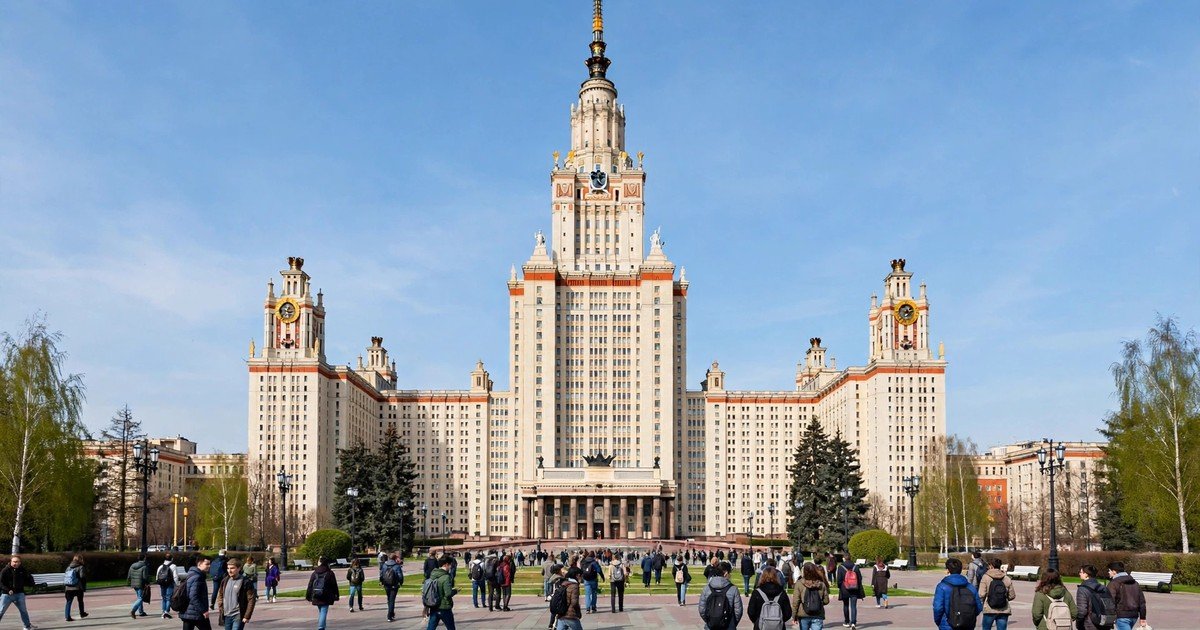
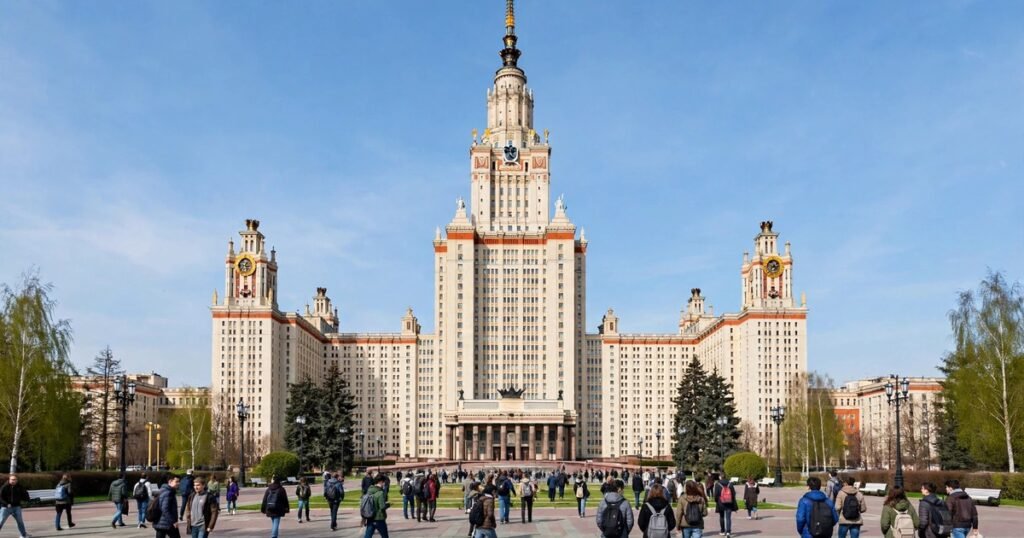
Russia’s best-known universities include Lomonosov Moscow State University, Saint Petersburg State University, RUDN University in Moscow, Bauman Moscow State Technical University, ITMO University in Saint Petersburg, Kazan Federal University, Novosibirsk State University and Tomsk State University. For medicine, well-known institutions include Sechenov University, Pirogov Russian National Research Medical University, and the medical faculties of Kazan Federal University and RUDN University. Each has its own strengths, and the right choice depends on your field and your budget. These universities are the first choice for many Pakistani students who study in Russia.
Most programmes in Russia are taught in Russian, so students normally begin with a preparatory year, called the preparatory faculty, where they learn the Russian language and the basic subjects of their field. This year prepares students to study in Russian alongside Russian students. A growing number of programmes, mainly at master’s level and in medicine and engineering, are taught in English, but these are fewer in number and should be checked programme by programme on the university’s official website.
Admission to a Russian bachelor’s programme normally requires an intermediate qualification, usually FSc Pre-Medical for medicine or FSc Pre-Engineering for engineering, from a recognised board in Pakistan. Admission to a master’s programme requires a completed bachelor’s degree in a relevant field. Pakistani students applying to an English-taught programme usually need an English test such as IELTS, while students applying to a Russian-taught programme will learn Russian in the preparatory year. Our IELTS preparation guide explains how to prepare for the test and what score to aim for.
Tuition and Living Costs
Tuition fees in Russia are affordable by international standards, and the fee differs from one university and one programme to another. Medicine and dentistry usually cost more than other fields, and universities in Moscow and Saint Petersburg usually charge more than universities in smaller cities. Because fees differ so much between programmes, you must confirm the current fee for your exact programme on the university’s official website, and never rely on a fee figure quoted on an unofficial website or in a social media post. Knowing the range helps you budget before you study in Russia.
Living costs in Russia are also affordable by international standards. Student housing is usually the cheapest option, and food, transport and other daily costs are lower than in Western Europe. Moscow and Saint Petersburg are the most expensive cities, while Kazan, Novosibirsk, Tomsk and other regional cities are considerably cheaper. Students often reduce costs by living in university hostels, cooking at home and using a student travel card. The Russian authorities require proof that you can support yourself during your studies, and the exact requirements should be confirmed from the Russian embassy.
Russia offers one of the most generous scholarship schemes for international students. The Russian Government Scholarship, also known as the quota scholarship, covers tuition fees and provides a monthly allowance, and it is awarded to students from Pakistan through a selection process run by the Russian embassy and the relevant authorities. Check the scholarship details on the website of the Russian embassy and on the official scholarship portal, and read our scholarships for Pakistani students guide for the kinds of support that are available in general.
Student Visa to Study in Russia
Pakistani students need a student visa to study in Russia. The visa application is made through the Russian embassy in Pakistan, and it can only be started after the university has issued an invitation letter. The invitation is arranged by the university after you are admitted, and it takes time to be issued, so you should apply to the university early and not book travel until the visa is granted.
The usual requirements for a student visa include an invitation letter from a Russian university, an admission letter or contract, a valid passport, a medical certificate and an HIV test result in some cases, and passport photographs. You will normally need to attend an appointment at the embassy or a visa application centre to submit your documents and give your biometric information. The embassy will tell you the exact list of documents, and you should follow its instructions exactly.
Your student visa is normally granted for the first period of study and is then extended inside Russia for the length of your programme. After you arrive in Russia, you must register your stay with the local migration authorities within the time given, with the help of your university’s international office. Keep copies of every document you submit, and keep your admission letter, your invitation and your medical certificates safe, because you may need them again when you extend your visa. Never pay an agent who promises a guaranteed visa; the decision is made by the Russian authorities alone.
How to Apply
Applications to Russian universities are made through the university’s own admission portal, or through the official Russian scholarship portal for government scholarship applicants. Follow these steps when applications are open: Every applicant who wants to study in Russia should follow these steps in order.
- Choose your programme and your university. Check the language of instruction, the admission requirements and the tuition fee for your exact programme on the university’s official website.
- Check the application deadline for your programme. Deadlines differ between universities and between bachelor’s and master’s programmes, and late applications are normally not accepted.
- Prepare your documents. You will usually need your matric and intermediate certificates and marks sheets, your bachelor’s degree and transcript if you are applying for a master’s, your passport, and a medical certificate if the university asks for one.
- Get your documents attested and translated where required. Pakistani degrees often need attestation from the Higher Education Commission and from the foreign office, and any document that is not in Russian or English may need a certified translation into Russian.
- Submit your application through the university’s portal or the scholarship portal. Fill in every section carefully, upload clear copies of your documents, and check that your name and date of birth match your passport exactly.
- Wait for the admission decision. Universities normally send the decision by email or through the portal. If you are admitted, the university will arrange your invitation letter, which you need for your visa application.
- Apply for your student visa as soon as you have the invitation letter. Follow the instructions of the Russian embassy, attend your appointment, and keep copies of everything you submit.
- Arrange your accommodation and your travel only after your visa is granted. University hostels are the usual option for international students, and the university’s international office will help you with arrival and registration.
If you face a problem with the application portal, contact the university’s international office through the contact details on its official website. Do not pay anyone who offers to secure your admission or your visa for money; such offers are fraud.
Scholarships and Financial Support
The Russian Government Scholarship is the main scholarship for Pakistani students who want to study in Russia. It covers tuition fees and provides a monthly allowance, and it is awarded through a selection process run by the Russian embassy and the relevant authorities in Pakistan. Applicants apply through the official scholarship portal, choose their programmes, and are selected on the basis of their academic record. You should check the details and the deadline on the website of the Russian embassy and on the official scholarship portal, because the deadline is often months before the university application deadline.
Pakistani students should also look at scholarships offered by the Higher Education Commission of Pakistan and by individual Russian universities, some of which offer tuition fee discounts for strong international applicants. The details are published on each university’s website. Apply for scholarships early, because their deadlines are often months before the university application deadline.
Common Mistakes to Avoid When You Study in Russia
The most common mistake is trusting an agent who promises admission, a scholarship or a visa for money. Many students have lost money to agents who claim to have special links with Russian universities. Apply directly through the university’s official portal or the official scholarship portal, and trust only the university and the embassy for information. Checking the official source is the safest habit for anyone who plans to study in Russia.
The second mistake is applying late. Russian universities have firm deadlines, and the invitation letter for your visa takes time to be issued after admission. Start preparing your documents months in advance, and submit your application well before the closing date.
The third mistake is ignoring the language question. Most programmes in Russia are taught in Russian, and the preparatory year is a real year of study, not a formality. Take the preparatory year seriously, learn Russian well, and do not expect to switch to an English-taught programme without meeting its requirements.
The fourth mistake is submitting poor documents. Blurry scans, missing transcripts, untranslated certificates and names that do not match your passport can all delay or damage your application. Check every document before you upload it, and get attestations and translations done well in advance.
Is study in Russia free for Pakistani students?
Not normally, but tuition fees in Russia are affordable by international standards, and the Russian Government Scholarship covers tuition fees and provides a monthly allowance for selected students. The fee differs by university and programme, and it must be confirmed on the university’s official website for your exact programme.
Which universities in Russia are best for Pakistani students?
Lomonosov Moscow State University, Saint Petersburg State University, RUDN University, Bauman Moscow State Technical University and ITMO University are the best known. For medicine, Sechenov University, Pirogov Russian National Research Medical University and the medical faculties of Kazan Federal University and RUDN University are popular choices.
Do I need IELTS to study in Russia?
Most programmes in Russia are taught in Russian, and students learn the language in the preparatory year. English-taught programmes usually require proof of English, such as IELTS. The exact requirement is set by each university and programme, so check the admission page of the programme you are applying to.
How do I get a student visa for Russia from Pakistan?
After you are admitted, the university arranges an invitation letter for you. With the invitation letter, apply for a student visa through the Russian embassy in Pakistan. You will need your invitation letter, admission letter, valid passport, medical certificate and photographs, and you will attend an appointment to submit your documents and give your biometric information.
Can I work while studying in Russia?
Yes, students are normally allowed to work part time alongside their studies, within the conditions of their visa and residence rules. The exact conditions are set by the Russian authorities and should be confirmed from the Russian embassy before you plan around them.
Closing Note: Study in Russia for Pakistani Students
Study in Russia offers Pakistani students a high quality education at an affordable cost, with strong programmes in medicine, engineering and the sciences, and a generous government scholarship scheme. The main challenges are the Russian language, the cold winters, and the need to apply directly through official channels and to plan well ahead. Choose your programme carefully, confirm the current fee and deadline on the university’s official website, prepare your documents early, and apply for your visa as soon as you have your invitation letter. With honest planning and timely preparation, Russia can be an excellent choice for your studies. With good planning, the decision to study in Russia can open doors to a strong career.
Academic honesty note: apply only through the official university portal or the official scholarship portal and the official immigration channels, and never pay anyone who promises admission, a scholarship or a visa for money. Sit
your own English test, submit your own documents, and trust only the official announcements for fees, deadlines and
visa requirements.
Study in Russia: Final Checklist for Pakistani Students
Use this checklist in the final week before you apply, because a careful last review can save you from a rejected application to study in Russia. First, check that your passport is valid for at least eighteen months and that your photographs meet the size the embassy asks for. Second, confirm that your matric and intermediate certificates are attested, and keep scanned copies ready for the online form. Third, read the university document list one more time and tick off each item as you upload it, because the admission team that handles your study in Russia application checks every document, and a missing paper can delay your offer by weeks.
Finally, note the closing date in your calendar and submit at least three days early, so a slow connection or a portal error cannot make you miss the deadline for your plan to study in Russia. In short, a calm final check is part of a strong application to study in Russia.
Money planning matters as much as admission when you study in Russia, so build a simple monthly budget for your study in Russia before you travel. Include rent, food, transport, books and health cover, and keep an emergency amount aside for the first month, because settling in always costs more than expected. Many students who study in Russia also ask about part-time work, but you should first learn the rules for student work, since working without permission can harm your visa status.
As a result, treat your scholarship or family support as your main income while you study in Russia, and treat any extra work as a bonus, not a plan. In short, a clear budget keeps your focus on your degree, and it keeps your study in Russia journey free from money worries.
After your visa is stamped, plan your arrival for your study in Russia the same way you planned your application to study in Russia. Book your flight early, confirm your university accommodation before you leave Pakistan, and carry the address and phone number of your university contact in your hand luggage. In your first week, register with the university, open a local bank account if you need one, and buy a local SIM card so your family can reach you.
Students who study in Russia often say the first month feels busy, so give yourself time to settle, join one student society, and ask senior Pakistani students for advice. Finally, keep your documents safe and keep copies online, because a calm start makes the rest of your study in Russia experience much easier.