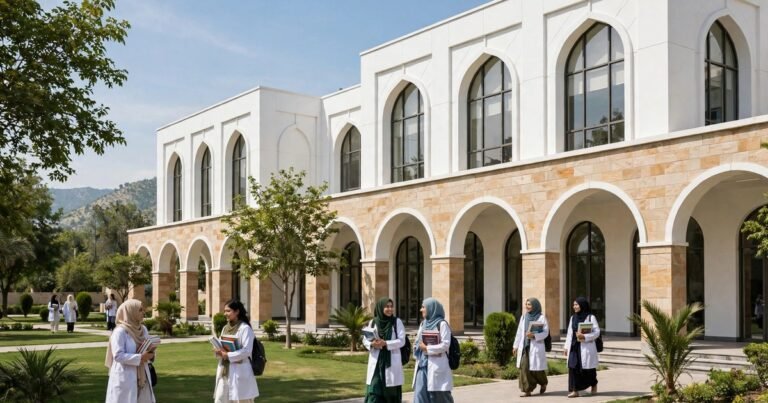
Scholarships for Gilgit-Baltistan Students: Options and How to Apply
For many students in Gilgit-Baltistan, scholarships for Gilgit Baltistan are the bridge between a good result and a degree. The region’s colleges and universities sit far apart, travel is long and costly, and many families live on modest incomes. That is why scholarships for Gilgit Baltistan matter so much: they cover fees, books and living costs, and they let a bright student from a mountain valley study in Gilgit, Skardu, Lahore or Islamabad without the family going into debt. This short opening sets out what scholarships for Gilgit Baltistan can do, and the sections below explain each option in turn.
Scholarships for Gilgit Baltistan students open the door to higher education for students from a region of mountains, valleys and scattered towns. Many students travel long distances to reach a college or university, many study in institutions far from home, and many families have limited incomes. Scholarships for Gilgit Baltistan students, often called GB students, are designed to meet these challenges, so that talented and deserving students from the region can complete their education. This guide explains the main scholarship options open to students from Gilgit-Baltistan, who can apply for them, what documents are usually needed, and how the application process works, step by step.
One point must be made clearly at the start. No date, deadline, fee figure, scholarship amount, quota or eligibility cut-off is stated in this guide. Scholarship amounts, closing dates, the number of awards and the exact eligibility conditions are announced for each scheme and each session, and they can change from one year to the next. Always read the official announcement for the scheme you are interested in, and treat any amount or date quoted on social media or an unofficial website as a rumour until the awarding body confirms it.
Quick Facts
| Item | Detail |
|---|---|
| Who this guide is for | Students domiciled in Gilgit-Baltistan, studying at college or university level in Pakistan |
| Main types of support | Regional scholarships, need-based scholarships, merit scholarships, and support from federal schemes, trusts and universities |
| Main awarding bodies | The Government of Gilgit-Baltistan, the Higher Education Commission, universities, and private trusts and welfare organisations |
| Usual documents | Gilgit-Baltistan domicile, admission letter, academic certificates and marks sheets, national identity card or B-Form, and income proof |
| How to apply | Through the official portal or office of the awarding body, within the announced application period |
| Dates, amounts and quotas | Announced per scheme and per session; no date, fee, amount or quota figure is stated in this guide |
Why Gilgit-Baltistan Students Need Dedicated Support
Students from Gilgit-Baltistan often study far from home, and scholarships for Gilgit Baltistan students help them meet that cost. A student from a remote valley may need to move to Gilgit, Skardu, Islamabad, Lahore or Karachi for a degree, and that move brings hostel charges, transport costs and daily living costs on top of tuition. Travel itself can be difficult and costly, especially in winter, when mountain roads are affected by weather. For a family with a limited income, these costs can make higher education seem out of reach, even when the student has a strong academic record.
Scholarships for Gilgit Baltistan students recognise this reality. Some schemes are reserved for students domiciled in Gilgit-Baltistan, some give priority to students from remote districts, and some support students who secure admission to universities outside the region. Together, they give a student from Gilgit-Baltistan a fair chance to study at a good institution, wherever it may be.
Students should also know that support is not limited to one field. Gilgit-Baltistan students study medicine, engineering, law, teaching, computer science, business, agriculture and many other subjects, and scholarships for Gilgit Baltistan students are open across these fields. The choice should be guided by interest and ability, and by the support available at the institution, rather than by the assumption that only certain subjects are funded.
Regional and Government Scholarships for Gilgit Baltistan Students
The Government of Gilgit-Baltistan runs scholarship and support schemes for students of the region, usually through its education department or higher education setup. These schemes may support students at intermediate, undergraduate and postgraduate level, and scholarships for Gilgit Baltistan students may cover students studying within Gilgit-Baltistan and students studying in other parts of Pakistan. The announcement for each scheme states the level of study, the fields covered, and the eligibility conditions.
Some regional schemes focus on students from particular districts, or on students who have completed their earlier education in a public sector school in Gilgit-Baltistan. Others focus on students from low-income families, or on students who secure admission to a public sector university on open merit. Students applying for scholarships for Gilgit Baltistan students should read the announcement carefully and check whether their district, their level of study and their institution are covered.
The Gilgit-Baltistan domicile certificate is the key document for scholarships for Gilgit Baltistan students. A student who is domiciled in Gilgit-Baltistan should keep the domicile certificate safe, and should make sure it is valid and up to date before the scholarship season begins. If the certificate is lost or expired, apply for a fresh one well in advance, because a scholarship application cannot wait for it.
Federal and HEC Scholarships Open to GB Students
Gilgit-Baltistan students can also apply for federal and national schemes. The Higher Education Commission has run need-based scholarship schemes for students in public sector universities, and our HEC need-based scholarship guide explains how such schemes usually work. These schemes are open to students from all parts of Pakistan, including Gilgit-Baltistan, and they are awarded on the basis of need and academic record.
The federal government has also announced scholarship schemes from time to time that give special attention to students from Gilgit-Baltistan and other less developed areas. The Ehsaas undergraduate scholarship programme, for example, was designed to support students from low-income families in public sector universities, and our Ehsaas undergraduate scholarship guide describes how such a programme is organised. Students should watch the official announcements of the Higher Education Commission and the federal government, because new schemes are announced with each academic session.
Students from Gilgit-Baltistan may also be eligible for reserved seats in universities in other provinces, and some of those seats come with scholarship or fee support. Scholarships for Gilgit Baltistan students can sometimes be tied to such a reserved seat, so when applying for admission, students should ask the admission office whether a reserved seat for Gilgit-Baltistan carries any financial support, and what the conditions are.
Merit Scholarships for Gilgit-Baltistan Students
Merit scholarships reward academic performance, and Gilgit-Baltistan students with strong results can apply for them alongside need-based support. Scholarships for Gilgit Baltistan students on merit may be awarded on the basis of a high position in the board examinations, a strong entry test result, or good performance in the semester examinations of the degree course. Some merit scholarships are awarded automatically on the basis of the admission merit list, while others need a separate application.
Provincial and regional education endowment funds are one source of merit support. While the Punjab Educational Endowment Fund is the best known, and our PEEF scholarship guide explains its general pattern, Gilgit-Baltistan has its own regional arrangements, and students should check the programme that covers their region of domicile. Some funds support students from the time of admission right through the course, as long as the student keeps up the required academic standard.
Support from Universities, Trusts and Welfare Organisations
Universities themselves run need-based support and fee concessions, and scholarships for Gilgit Baltistan students are often administered through the student affairs office of the student’s own university. Many public universities have a financial aid office, a student welfare fund, or a fee concession system for students who can show genuine need, and some universities offer hostel support to students from remote areas.
Many private trusts, welfare organisations and charitable foundations in Pakistan support students from Gilgit-Baltistan. Some of these organisations were set up specifically to support education in the region, while others support students from less developed areas across the country. They may support a small number of students each year, but for the student who receives the award, the support can cover a large part of the cost of the course. Information about scholarships for Gilgit Baltistan students from such trusts is often shared by the student affairs office, by senior students, or through the official website of the organisation itself.
Some scholarships are linked to service in Gilgit-Baltistan after graduation. A student may receive support on the condition that, after completing the degree, the student serves for a period in the region, for example in a public sector hospital, school or department. Students should think carefully before accepting such a condition, and they should be sure they are willing to honour it. A service-linked scholarship can be a good choice for a student who already plans to work in Gilgit-Baltistan, but it should not be accepted lightly.
How to Apply for Scholarships for Gilgit Baltistan
The application process for scholarships for Gilgit Baltistan students is similar for most schemes, although each awarding body has its own form and its own portal. Follow these steps when a scheme is announced:
- Read the official announcement for scholarships for Gilgit Baltistan in full. Note the eligibility conditions, the documents required, the method of application, and the closing date given in the announcement.
- Check your own eligibility for scholarships for Gilgit Baltistan honestly. Confirm your domicile, your programme, your year of study, your academic record and your family income against the conditions of the scheme.
- Collect your documents for scholarships for Gilgit Baltistan in advance. Keep your Gilgit-Baltistan domicile certificate, admission letter, matric and FSc certificates and marks sheets, your entry test result, your national identity card or B-Form, your family income proof, and recent photographs ready in clear copies.
- Fill in the application form carefully. Enter your name, your father’s name and your date of birth exactly as they appear on your matric certificate, and enter your academic record exactly as it appears on your marks sheets.
- Attach or upload the documents asked for, in the format given in the announcement. Check that every page is readable and that no page is missing before you submit.
- Submit the application for scholarships for Gilgit Baltistan before the closing date, and keep proof of submission. Save the acknowledgement, the tracking number, or a copy of the submitted form, so that you can follow up later if needed.
- Follow up through the official channel only. Check the awarding body’s website or notice board for the list of selected students, and respond to any request for verification within the time given.
Apply early, because the application portal is often under heavy load near the closing date, and an upload problem at the last minute can mean a missed chance. Never pay anyone who promises to arrange a scholarship for money. Genuine scholarships are awarded on the basis of eligibility and merit, and no agent can buy a place on a selection list.
Documents You Will Usually Need
Most scholarship applications ask for a similar set of documents, and a student who keeps them ready will find every application easier. Keep the original documents safe at home, and keep clear photocopies and scanned copies ready for use. The usual list for scholarships for Gilgit Baltistan students includes the Gilgit-Baltistan domicile certificate, the admission letter or fee receipt from the institution, the matric and FSc certificates and marks sheets, the entry test result, the national identity card or B-Form, and proof of family income.
Common Mistakes to Avoid
The most common mistake in applying for scholarships for Gilgit Baltistan students is applying late, or not applying at all because the student assumes the scholarship is only for toppers or only for students in Gilgit city. Many schemes are need-based, and many are open to students from every district of Gilgit-Baltistan. Apply for every scheme for which you are eligible, wherever you study.
The third mistake is trusting unofficial information. Amounts, dates and eligibility conditions quoted on social media or by agents are often wrong or out of date. Trust only the official announcement from the awarding body, and confirm every detail from that source before you act on it.
Can I apply if I study outside Gilgit-Baltistan?
Yes, in many cases. Several schemes for Gilgit-Baltistan students support students who study in universities in other parts of Pakistan, as long as the student is domiciled in Gilgit-Baltistan and meets the other conditions of the scheme. Read the announcement for each scheme, because some schemes are limited to students studying within the region while others are open more widely.
Do I need a Gilgit-Baltistan domicile to apply?
For schemes that are specifically for Gilgit-Baltistan students, yes, a Gilgit-Baltistan domicile certificate is usually required, and it is the key document that proves eligibility. For general national schemes, a domicile from any part of Pakistan is accepted, but the Gilgit-Baltistan domicile may still be an advantage where a scheme gives priority to students from less developed areas.
Can I apply for more than one scholarship at the same time?
In many cases, yes, you can apply for more than one scheme, as long as you meet the eligibility conditions of each one. Some schemes, however, do not allow a student to hold two major scholarships at the same time, and a student who is selected for two schemes may have to choose one. Read the terms of each scheme carefully, and declare any other scholarship you already hold when the form asks for it.
What happens if my scholarship is stopped during the course?
A scholarship may be paused if the student no longer meets the conditions of the scheme, for example by missing classes or by falling behind in study. If this happens, contact the awarding body through the official channel and ask for the reason in writing, so that you know what to put right.
Where should I look for new scholarship announcements?
Watch the official websites of the Government of Gilgit-Baltistan and its education department, the Higher Education Commission, your own university or college, and the trusts and organisations that support students from Gilgit-Baltistan. The student affairs office of your institution is also a good source, because many announcements are shared there first. Check these sources regularly, because application periods are limited.
Closing Note
Students from Gilgit-Baltistan have talent, determination and a strong desire to learn, and scholarships exist so that distance and family income do not stand in the way of a degree. Learn about the options that fit your situation, keep your domicile certificate and your documents ready, apply on time through the official channel, and keep your academic standard high so that your support continues. If you are a student from Gilgit-Baltistan, do not assume that scholarships are out of reach. Many students from the region have completed their degrees with the help of these schemes, and with careful planning, you can too.
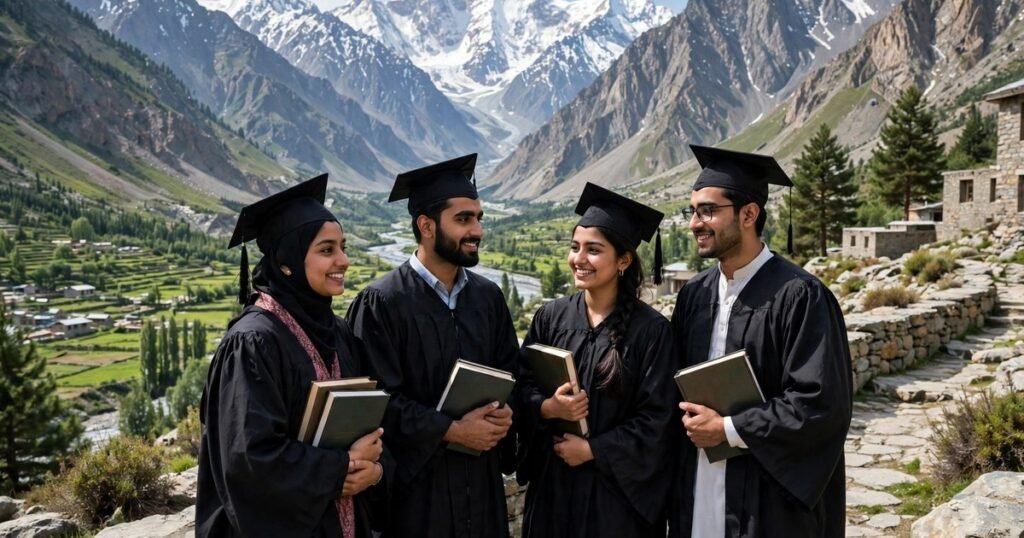
Scholarships for Gilgit Baltistan: Planning Your Application Early
The strongest applications for scholarships for Gilgit Baltistan are the ones that start months before the closing date. A student who begins early can collect documents one by one, get the domicile certificate checked, and ask a teacher for a recommendation without rushing. Early planning also leaves time to sit an entry test, improve a weak subject, or gather income proof from the family. By contrast, a last-minute application often misses a document, and there is no time left to fix it. Start with a simple list of the schemes you want, then work through the documents for each one, and mark the closing date of every scheme on a calendar you check each week.
Scholarships for Gilgit Baltistan: Keeping Your Documents Ready
Most schemes for scholarships for Gilgit Baltistan ask for the same set of papers, so a ready file saves time again and again. Keep the domicile certificate, admission letter, matric and FSc certificates, marks sheets, entry test result, national identity card or B-Form, income proof and recent photographs together in one folder, with clear copies of each. Check that the names and dates match across every document, because a mismatch can delay a decision or lead to a rejection. Renew any document that has expired, and keep both the originals and the copies safe. When a new scheme opens, a ready file lets you apply on the first day, and that early start often makes the difference.
Scholarships for Gilgit Baltistan: Following Merit Lists and Results
After you apply for scholarships for Gilgit Baltistan, the waiting begins, and it helps to know how the next steps work. Awarding bodies usually check eligibility first, then shortlist candidates, and finally publish a merit list or send an offer letter. Watch the official website and the notice board of the awarding body, and keep your phone number and email address active so that no message is missed. If your name appears on a list, follow the instructions at once, because an offer can lapse if the acceptance is late. If your name does not appear, ask the office politely for the reason, and use the answer to improve your next application.
Two guides on this site go deeper into the schemes mentioned above. Our HEC need-based scholarship guide explains who can apply for need-based support and how the process usually works. Our Ehsaas undergraduate scholarship guide describes how that programme is organised, who it serves, and what documents it asks for.
Reading both guides will help you compare need-based and merit-based routes before you choose. For official announcements, the Higher Education Commission website carries the latest scheme notices and application portals, so check it whenever a new session opens.
A degree is within reach for a talented student from Gilgit-Baltistan, and scholarships for Gilgit Baltistan are the practical way to pay for it. The work is simple, but it takes care: read each announcement in full, keep your documents ready, apply early, and follow up through the official channel only. Do the same for every scheme you try, and treat each application as a fresh start. With steady effort, scholarships for Gilgit Baltistan can open the door to the university and the career you have worked for.
Related guides: VU Admission Guide, AIOU MA Admission Guide and VU Degree Programmes Guide.