PIEAS Entry Test: Pattern, Subjects and How to Prepare
The PIEAS entry test rewards steady, focused preparation rather than last-minute cramming. This guide adds a practical study plan, a subject-wise revision routine and test-day habits that help you face the PIEAS entry test with confidence.
The Pakistan Institute of Engineering and Applied Sciences, PIEAS, is one of the most respected engineering and science universities in the country. Its graduates work in research, industry and the public sector, and admission to PIEAS is highly competitive. The PIEAS entry test is the main step in that admission, and this guide explains its pattern, the subjects it covers, how to prepare for it, and what to expect on the day of the test.
One point must be made clearly at the start. The test pattern, the syllabus, the number of questions, the test centres and the admission dates are announced by PIEAS for each admission cycle, and no date, fee, marks or weightage figure is stated in this guide. PIEAS publishes its admission information in the official announcement and on its website, pieas.edu.pk. Any figure you see on social media or an unofficial website should be treated as a rumour until PIEAS confirms it.
Quick Facts
| Item | Detail |
|---|---|
| Institute | Pakistan Institute of Engineering and Applied Sciences (PIEAS), Islamabad |
| Test | PIEAS entry test for undergraduate engineering and science programmes |
| Subjects tested | Physics, mathematics, chemistry and English, based on the FSc syllabus |
| Question style | Multiple-choice questions that test concepts, calculation and reasoning |
| Official source | pieas.edu.pk and the official PIEAS admission announcement |
| Dates, fees and marks | Announced by PIEAS for each admission cycle; no figure is stated in this guide |
What the PIEAS Entry Test Covers
The PIEAS entry test is built on the FSc pre-engineering syllabus. The main subjects are physics, mathematics, chemistry and English. The test asks multiple-choice questions that check whether you understand the concepts, whether you can apply formulas correctly, and whether you can work through a numerical problem step by step. It is not a test of memory alone; it rewards students who can think.
Physics is the heart of the PIEAS test. It covers mechanics, electricity and magnetism, waves, optics, thermodynamics and modern physics from the intermediate syllabus. The questions often describe a physical situation and ask you to work out what happens next, or to choose the correct formula and apply it. You should be comfortable with the standard results and laws, but more importantly you should understand why they hold. A student who understands the idea behind a formula can use it in a new situation, while a student who only memorised it cannot.
Mathematics carries great weight in the PIEAS test, because engineering is built on mathematics. The test covers algebra, trigonometry, calculus, vectors and coordinate geometry from the FSc course. The questions test both speed and accuracy: you must be able to work through a problem quickly and without error. Regular practice is the only way to build this speed. Solve problems every day, and keep a list of the mistakes you repeat, so that you can correct them before the test.
Chemistry covers physical, organic and inorganic chemistry from the intermediate syllabus. The questions test your understanding of chemical bonding, reactions, equilibrium and the properties of elements and compounds. For engineering applicants, chemistry is usually a smaller part of the test than physics and mathematics, but it still matters, and weak chemistry can cost you a place. Do not ignore it.
English in the PIEAS test covers reading comprehension, vocabulary, grammar and sentence structure. It is tested because engineering study and research require reading and writing in English. Many engineering students are strong in mathematics and physics but weak in English, and this can cost them marks. Study English alongside your science subjects, not after them.
How the PIEAS Test Differs From ECAT and Other Tests
Students often compare the PIEAS test with the ECAT, the entry test for the UETs. The two tests cover similar subjects, but they differ in style and emphasis. The PIEAS test is known for questions that require deeper thinking and careful calculation, while the ECAT is broader and more closely tied to the board examination style. A student who has prepared for the ECAT will find much of the PIEAS syllabus familiar, but should still practise PIEAS-style questions to get used to the difference.
Another difference is the competition. PIEAS admits a small number of students each year, so the merit is high and the margin for error is small. A few marks can decide whether you are selected. This means that accuracy matters as much as knowledge: careless mistakes in easy questions can be as damaging as ignorance of hard ones. Practise with care, and always check your work.
PIEAS also has a strong research character. The institute is known for its work in nuclear science, engineering and applied sciences, and its programmes attract students who want to work in research and technology. If that is your interest, PIEAS is an excellent choice, and the test is the first step. Our ECAT past papers guide explains how to practise with old papers, and the same method works for PIEAS preparation.
How to Prepare for the PIEAS Entry Test
Good preparation for the PIEAS test takes months. Start with the FSc textbooks, because they contain the syllabus the test is built on. Read each chapter to understand it, and then practise the problems at the end of the chapter. Do not move on until you can solve the problems without looking at the solutions.
- Begin with the official PIEAS admission announcement. Note the subjects covered and the general pattern, and plan your preparation around them.
- Revise the FSc textbooks in physics, mathematics and chemistry thoroughly. Make short notes of the key formulas, laws and reactions, and revise those notes regularly.
- Practise mathematics every day. Speed and accuracy come only from regular problem solving, so set aside time for mathematics even on days when you study other subjects.
- Study English every day. Practise reading comprehension passages, learn new words in context, and revise the grammar rules that commonly appear in tests.
- Practise with past papers and sample questions from reliable sources. Time yourself, so that you learn to finish within the time allowed. Review every wrong answer and understand why it was wrong.
- Take full-length mock tests under test conditions. Sit in a quiet room, keep to the time limit, and do not look at the answers until you have finished. A mock test shows you where you are weak and how fast you work.
Many students join an academy for PIEAS and ECAT preparation, and a good academy can help with structure and practice. But an academy is not a substitute for your own study. The students who do best are usually the ones who study the textbooks themselves, solve problems daily, and use the academy only for guidance and testing. Our entry test preparation plan explains how to build a balanced weekly schedule that covers all subjects together.
What to Expect on Test Day
On the day of the test, arrive at the centre early, with the documents PIEAS asks for and the items allowed in the examination hall. Read the instructions on the question paper carefully before you begin. The test is multiple choice, so you will mark your answers on an answer sheet or a computer, depending on the format PIEAS uses in that cycle.
Do not spend too long on any single question. If a question is difficult, mark it, move on, and return to it later if time allows. It is better to answer all the questions you know first and then spend the remaining time on the hard ones. Keep an eye on the time, and leave enough time at the end to check that you have marked every answer.
Stay calm if a question seems unfamiliar. The test is designed to be challenging, and every candidate finds some questions hard. Panicking over one question wastes the time you need for the questions you can answer. Read each question twice, eliminate the options that are clearly wrong, and choose the best answer from the ones that remain.
Common Mistakes to Avoid
The most common mistake is preparing only for the ECAT and assuming the same preparation will work for PIEAS. The syllabuses overlap, but the PIEAS test demands deeper thinking and faster calculation, so practise PIEAS-style questions separately.
The second mistake is ignoring English. Engineering students often leave English until the end, and then lose marks they could easily have gained. English should be part of your daily study from the start.
The third mistake is memorising formulas without understanding them. PIEAS questions are designed to catch students who have memorised a formula but cannot apply it. If you can explain why a formula works and use it in a new situation, you are ready. If you can only repeat it, you are not.
The fourth mistake is careless calculation. In a test where a few marks decide the result, a sign error or a misplaced decimal can cost you a place. Practise with care, and build the habit of checking your answer before you move on.
What Happens After the Test
After the test, PIEAS announces the results and the merit list according to its own schedule. If you are selected, the institute will guide you through the admission and enrolment steps. If you are not selected, do not treat it as the end of your engineering career. Many excellent engineers studied at other universities, and a single test does not measure your worth. Review your performance, identify your weak areas, and decide whether to try again or to take admission elsewhere. Our NUST entry test guide is a useful next read if you are considering other leading engineering universities as well.
Which subjects are tested in the PIEAS entry test?
Physics, mathematics, chemistry and English, based on the FSc pre-engineering syllabus. Physics and mathematics carry the greatest weight for engineering applicants, but chemistry and English also matter and should not be ignored.
How is the PIEAS test different from the ECAT?
The syllabuses overlap, but the PIEAS test is known for deeper, more demanding questions that require careful thinking and calculation, and PIEAS admits a smaller number of students, so the merit is high. Prepare for each test separately, even though much of the syllabus is shared.
How long should I prepare for the PIEAS entry test?
Most successful candidates prepare for several months alongside their FSc studies. Start early, revise the textbooks thoroughly, solve mathematics problems every day, and practise with past papers and mock tests under timed conditions.
Can I prepare for the PIEAS test without joining an academy?
Yes. Many students prepare on their own using the FSc textbooks, past papers and mock tests. An academy can provide structure and practice, but it is not a substitute for your own study, and disciplined self-study can be just as effective.
Is English important in the PIEAS entry test?
Yes. English is tested because engineering study and research require reading and writing in English. Many engineering students lose marks in English that they could easily have gained with regular daily practice, so study it from the start of your preparation.
Closing Note
Admission to PIEAS is competitive, but the test is fair: it rewards students who understand physics and mathematics deeply, calculate carefully, and read well in English. Start early, study the FSc textbooks for understanding rather than memory, solve problems every day, and practise under timed conditions. On test day, stay calm, manage your time, and answer the questions you know first. Whether or not you are selected, the discipline and knowledge you build during this preparation will serve you throughout your engineering education.
Academic honesty note: apply only through the official PIEAS admission process, and never pay anyone who promises a seat, a leaked paper, or a guaranteed result for money. Prepare with your own honest study, and trust only the official announcements on pieas.edu.pk for dates, fees, test pattern and results.
PIEAS Entry Test Study Plan: A 12-Week Routine That Works
A good PIEAS entry test plan starts with a calendar, not with a book. First, count the weeks left before the PIEAS entry test and divide them into three blocks of four weeks. Then give each block one clear job: build concepts, practise questions, and take full mocks. In addition, keep one rest day every week so your mind stays fresh. A tired brain forgets fast, and the PIEAS entry test punishes tired mistakes.
Weeks one to four belong to your textbooks. For example, read one physics chapter and one mathematics chapter each day, then solve every exercise question. After that, write down the formulas you used, because writing fixes them in memory. Meanwhile, start a small English notebook for new words and grammar rules. By the end of week four, the PIEAS entry test syllabus should feel familiar, not strange.
Weeks five to eight are for mixed practice. Now that the basics are clear, solve past papers and chapter-wise MCQs under a timer. For instance, set 60 minutes for 50 questions and mark yourself strictly. As a result, you will see which topics still cost you marks. Next, spend the following day only on those weak topics. This loop is the heart of PIEAS entry test preparation, and it works because it targets your real gaps.
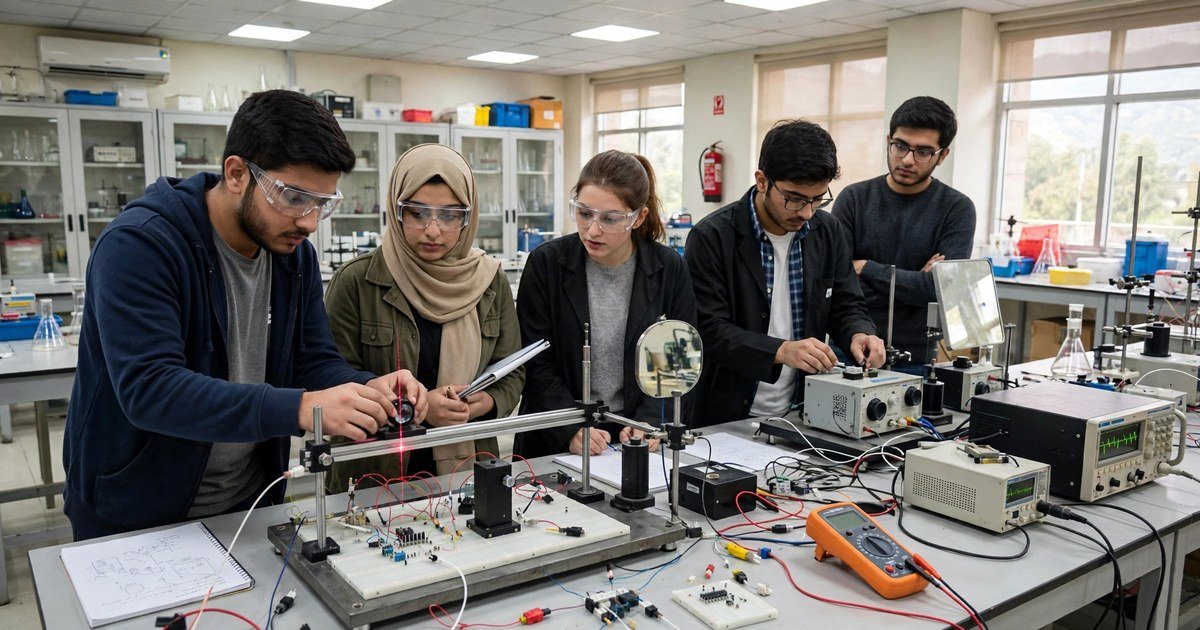
Plan each week around the PIEAS entry test pattern, not around random chapters. A small checklist helps: know the PIEAS entry test pattern, revise the syllabus weekly, practise MCQs daily, and review every mock honestly.
Weeks nine to twelve are for full mocks. Take one full-length test each week at the same time of day as the real exam. Then spend a whole day reviewing every wrong answer and every slow question. Similarly, practise filling the answer sheet neatly, because a rushed bubble costs a mark. Finally, in the last week, revise only your short notes and formulas. The PIEAS entry test rewards calm revision more than new topics at this stage.
PIEAS Entry Test Subjects: How to Revise Physics, Maths, Chemistry and English
Physics carries the most weight in the PIEAS entry test, so give it the most hours. Focus on mechanics, electricity and magnetism, because these topics appear year after year. In particular, learn to draw free-body diagrams and solve numericals step by step. On the other hand, do not memorise formulas without understanding them; a changed number in the question will expose that gap. Instead, practise each formula with three different values, and check your answer after the PIEAS entry test style of question: one concept, one calculation, one careful unit.
Mathematics needs daily practice, not weekend marathons. Solve 20 to 30 questions every day, and keep a list of the mistakes you repeat. Likewise, chemistry rewards the FSc textbook: read each chapter twice and note the reactions and definitions. English is the smallest section, but it is also the easiest to improve. For example, ten minutes of vocabulary and ten minutes of grammar each day add up fast. Together, these habits raise your PIEAS entry test score steadily, and they make the PIEAS entry test feel less stressful.
Short daily sessions beat long cramming before the PIEAS entry test. Even 90 focused minutes a day, kept up for three months, covers the whole syllabus twice.
PIEAS Entry Test Day: Habits That Protect Your Score
The day before the PIEAS entry test, stop studying by early evening. Pack your admit card, CNIC, pens and a watch, then sleep early. On the morning of the test, eat a light breakfast and reach the centre at least 45 minutes early. In addition, check the official PIEAS website for the latest instructions before you leave home, because centres and timings can change. A calm morning is worth more than one more chapter before the PIEAS entry test.
Inside the hall, read the instructions first and fill your details carefully. Then do a quick first pass: answer every question you know, and mark the rest for later. However, do not spend more than two minutes on any single question. After the first pass, return to the marked ones with fresh eyes. This method suits the PIEAS entry test because it rewards steady accuracy over lucky guesses. Finally, keep the last ten minutes for checking bubbles and unanswered questions. For more practice material, work through our ECAT past papers guide and follow a clear entry test preparation plan so your routine stays organised.
The PIEAS entry test is fair, and fair tests reward preparation. Start early, practise daily, and trust the plan you built. Good luck.