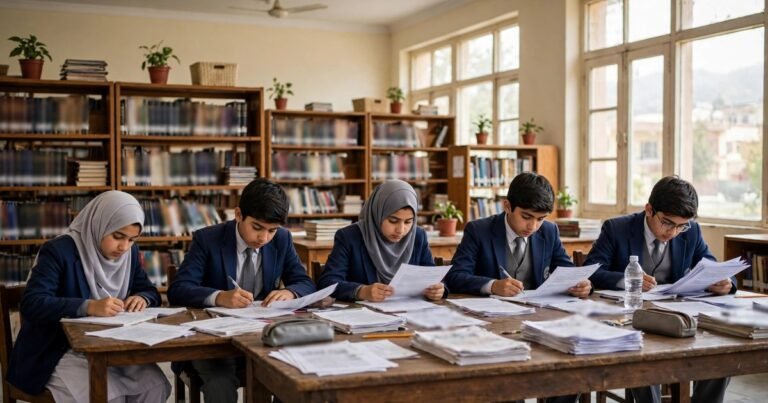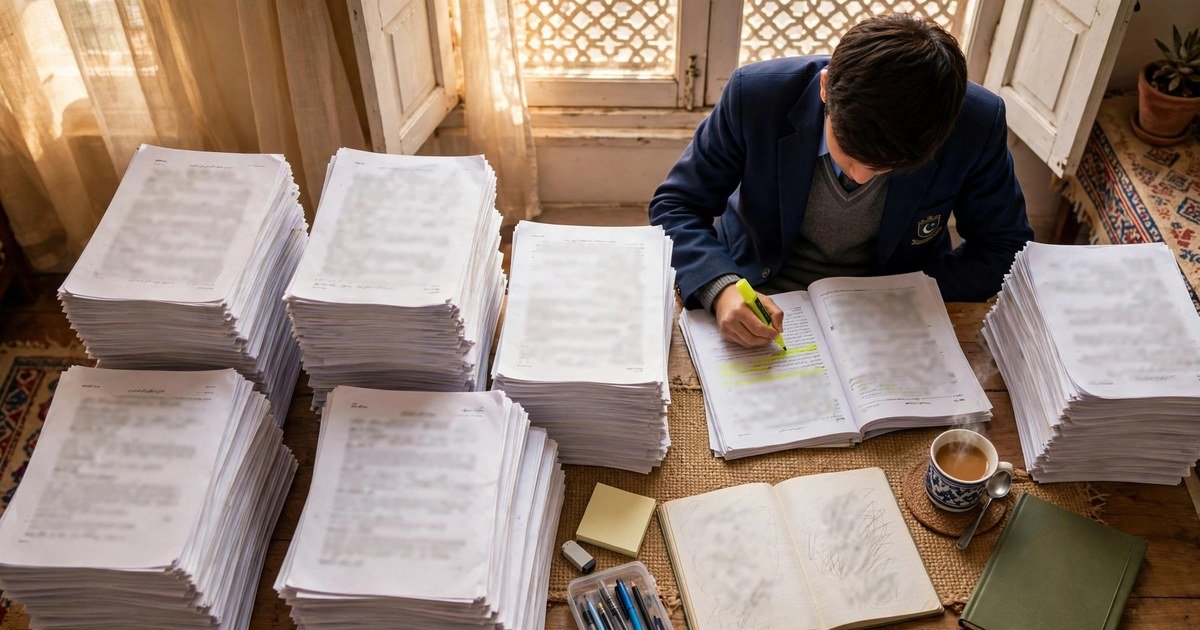
BISE Sukkur Past Papers: Where to Find Genuine Board Papers and Practise With Them
Past papers are one of the most useful study tools for students of the Board of Intermediate and Secondary Education, Sukkur. A past paper shows you exactly how the board sets its questions, which topics appear again and again, and how much time you should give to each section. Many students who score well in matric and inter examinations say the same thing: they practised with old papers until the pattern of the paper felt familiar. This guide explains where to find genuine BISE Sukkur past papers, how to tell a real board paper from a made-up one, and how to use old papers for revision without wasting your time.
One point must be made clearly at the start. This guide does not state any examination date, fee, or result date, because the board announces those separately for each session. Always confirm dates and instructions from the board’s official website or from the official notification issued by BISE Sukkur. Any date or fee you see on social media or on a random website should be treated as a rumour until the board confirms it.
Quick Facts
| Item | Detail |
|---|---|
| Board | Board of Intermediate and Secondary Education, Sukkur (BISE Sukkur) |
| Region served | Districts of the Sukkur division, including Sukkur, Ghotki, Khairpur and Naushahro Feroze |
| Levels covered | Matric (SSC Part I and Part II) and Intermediate (HSSC Part I and Part II) |
| Paper types | Objective, short questions and long questions, with subject-wise papers for science and arts groups |
| Official source | The board’s official website and the official notifications issued by BISE Sukkur |
| Dates and fees | Announced by the board for each session; no date or fee figure is stated in this guide |
What Are BISE Sukkur Past Papers?
A past paper is a question paper from a previous examination session of the board. For BISE Sukkur, past papers cover both matric and inter classes, and they are set for every subject the board examines, from English, Urdu, Sindhi and Pakistan Studies to physics, chemistry, biology, mathematics and the arts subjects. Each paper follows the board’s official pattern for that session, including the marks distribution between the objective section, the short questions and the long questions.
Past papers are useful because board papers do not change their basic shape from year to year. The syllabus stays largely the same, and the style of the questions repeats. A student who has worked through several years of past papers will recognise the way a question is asked, even when the topic is new. This familiarity reduces fear in the examination hall, and it helps the student manage time, because the student already knows how long each section should take.
It is important to understand what past papers are not. They are not a shortcut to the coming paper, and they do not tell you which questions will appear this year. No one can predict the next paper from old ones. What past papers give you is practice, pattern recognition and confidence. Students who treat them as a revision tool do well; students who only memorise old answers without understanding the subject do not.
Where to Find Genuine BISE Sukkur Past Papers
Genuine papers come from the board itself or from sources that reproduce the board’s papers faithfully. Follow these steps to find them:
- Start with the board’s official website. BISE Sukkur publishes model papers, sample papers and sometimes past papers on its official website. Look for the sections on examinations, downloads or model papers, and download the papers for your class and subjects directly from there.
- Ask your school or college. Teachers in the Sukkur region often keep collections of BISE Sukkur past papers, and many schools hold printed sets in their libraries. Your subject teacher can also tell you which years’ papers match the current syllabus.
- Use well-known bookshops in Sukkur, Khairpur and Ghotki. Solved past-paper books for BISE Sukkur are sold in local bookshops, and a printed book is easy to carry and to write on. Check the edition before you buy, and make sure it matches your current class and syllabus.
- Use trusted education websites that clearly label the board, the year and the session. A genuine paper will show the board’s name, the class, the subject, the year and the total marks. Our BISE Karachi past papers guide explains the same checks for another Sindh board, and the same rules apply here.
- Compare two copies before you trust a paper. If a paper downloaded from one website differs from the same paper in a printed book or on the board’s website, trust the board’s version. A paper with missing questions, wrong marks or a strange layout is probably a fake or a guess paper.
Be careful with papers shared in WhatsApp groups and on social media. Many of these are guess papers written by private academies, not real board papers. A guess paper may help you revise a topic, but it should never be treated as an official paper. Always check the source before you spend hours on a paper.
Which Subjects and Classes Are Covered
BISE Sukkur holds examinations for matric, classes 9 and 10, and for inter, classes 11 and 12. Past papers are available for the compulsory subjects, including English, Urdu, Sindhi, Islamiyat, Pakistan Studies and mathematics, and for the elective subjects of the science group, such as physics, chemistry and biology, and the arts group, such as economics, civics, education and history.
For matric, both Part I (class 9) and Part II (class 10) papers are useful. Class 9 papers help you understand the pattern early, and class 10 papers are the closest practice for your final board examination. For inter, Part I and Part II papers both matter, because the final result combines both years. Students in the pre-medical, pre-engineering and general science groups should practise the papers for their own group, since the questions differ between groups.
Before you start, check that the paper matches your current syllabus. The board revises the syllabus from time to time, and a paper from a very old session may include a topic that is no longer in the course, or miss a topic that has been added. Your teacher or the board’s official syllabus will tell you which topics are current. Read our BISE Multan past papers guide for a similar subject-wise approach used by students of another board.
How to Use Past Papers for Revision
Collecting past papers is easy; using them well takes a plan. Follow this method:
- Finish the chapter first, then attempt its past-paper questions. A past paper works best as a test of what you have already studied, not as a way to learn a topic for the first time. Read the chapter, make short notes, and then try the questions from that chapter in old papers.
- Attempt a full paper under examination conditions. Sit with a clock, a pen and no book, and finish the paper in the time the board allows. This trains your speed and your handwriting under pressure, and it shows you which sections take you too long.
- Mark your own paper honestly. Use the textbook and your class notes to check every answer, and write down the marks you would give yourself. Keep a record of your score for each paper, so you can see whether you are improving week by week.
- Study your mistakes. Every wrong answer points to a weak topic. Go back to the textbook, understand the topic properly, and then try similar questions from another year’s paper. This cycle of testing and correcting is where the real learning happens.
- Repeat the most important questions. Some question types appear in almost every session, especially in science subjects. If a type of numerical problem or a type of short question appears year after year, make sure you can answer it quickly and correctly.
- Revise with the paper, not just from the book. In the last weeks before the examination, your revision should be built around past papers. Attempt one paper a day for your weakest subject, and use the remaining time to fix the gaps the paper reveals.
Students who follow this method often find that the real examination feels familiar. They have already sat the same kind of paper many times at home, so the examination hall holds no surprises. Our guide on how to use past papers for revision explains the same timed-practice method in more detail, and it works just as well for board papers.
Common Mistakes to Avoid
The most common mistake is memorising answers without understanding them. A student who memorises the answer to a past-paper question will fail when the same topic is asked in different words. Understand the concept, then practise expressing it in your own words. The board rewards understanding, not cramming.
The second mistake is using only one year’s paper. A single paper shows only a small part of the syllabus. Work through at least three to five years of papers for each subject, so that you cover the full range of topics and question styles.
The third mistake is ignoring the objective section. Many students focus on long questions and skip the multiple-choice questions, yet the objective section carries a real share of the marks and is often the easiest place to gain or lose marks. Practise the objective questions from past papers just as seriously as the long questions.
The fourth mistake is trusting a guess paper as if it were a real paper. Guess papers are written by private teachers and academies, and they are only predictions. Use them for extra practice if you like, but base your revision on genuine board papers and on the textbook.
Past Papers and the Date Sheet
Past papers and the date sheet work together in your examination preparation. The date sheet tells you when each paper will be held, and the past papers tell you how each paper will look. When the board announces the date sheet, make a study timetable that gives your weakest subject the most days, and schedule full-paper practice for each subject a few days before its examination date.
Do not wait for the date sheet to start practising. Begin with past papers as soon as your syllabus is mostly covered, and keep the pace steady. A student who has already attempted several full papers before the date sheet is announced will feel calm when it arrives, while a student who starts only then will feel rushed. Check the board’s official website for the date sheet announcement, and read the instructions on the roll number slip when it is issued.
Is it enough to study only past papers for BISE Sukkur exams?
No. Past papers are a practice tool, not a replacement for the textbook. The board sets questions from the prescribed syllabus, and the textbook is the source of that syllabus. Study the textbook first, make your own notes, and then use past papers to test yourself and to learn the pattern of the paper.
Where can I download BISE Sukkur past papers for free?
The board’s official website is the best free source, and your school or college library may hold printed collections. Trusted education websites also share board papers, but check that each paper shows the board’s name, the class, the subject and the year before you rely on it. Avoid papers from unknown social media posts that cannot be verified.
How many years of past papers should I solve?
Three to five years of papers for each subject is a good target. This range covers most of the repeated topics and question styles without going so far back that the syllabus no longer matches. If you have more time, you can add more years, but always check that older papers match the current syllabus.
Are guess papers the same as past papers?
No. Past papers are the actual question papers from previous board examinations. Guess papers are predictions written by private teachers or academies, and they are not issued by the board. Guess papers can be used for extra practice, but they should never replace genuine past papers.
Can I use past papers for both matric and inter?
Yes. BISE Sukkur past papers are available for both matric (classes 9 and 10) and inter (classes 11 and 12), for science and arts groups. Practise the papers for your own class and group, and check that each paper matches the current syllabus for your subjects.
Closing Note
BISE Sukkur past papers are a simple, proven way to prepare for the board examinations. Find genuine papers from the board’s official website, your school or a trusted bookshop, check that they match your syllabus, and then practise them under examination conditions. Mark your work honestly, fix the mistakes, and repeat the process. Steady practice with real papers builds the confidence that makes the difference on examination day.
Academic honesty note: use only genuine board papers and your own study for preparation. Never buy leaked papers, never pay anyone who promises the coming paper, and never copy answers in the examination hall. Honest preparation is the only preparation that lasts.
Practising With BISE Sukkur Past Papers
Practising with BISE Sukkur past papers is the fastest way to see how the board sets its questions. When you work through BISE Sukkur past papers under timed conditions, you learn which topics the board repeats, how long each section takes, and where your answers are weak. Keep a short list of the questions you miss in BISE Sukkur past papers, then revise those topics from the textbook before you attempt the next paper. Used this way, BISE Sukkur past papers turn revision from reading into real practice, and each new set of BISE Sukkur past papers shows whether your marks are improving.
Before you download any paper, check it against the board’s own sources. The official BISE Sukkur website publishes model papers and notifications, so use it to confirm that a paper is genuine before you practise from it. A paper that matches the board’s pattern is worth your time; a paper from an unknown source is not. Keep your collection of BISE Sukkur past papers organised by subject and year, so that when you sit down to revise, the right BISE Sukkur past papers are ready without a search.
Start with the most recent BISE Sukkur past papers, then work backwards through older years. The recent BISE Sukkur past papers show the current pattern best, while older BISE Sukkur past papers are useful for extra practice on repeated topics. If a question appears in several sets of BISE Sukkur past papers, treat it as a priority, and make sure you can answer it without looking at the book.
BISE Sukkur Past Papers: A Two-Week Practice Plan
Use BISE Sukkur past papers in a short, focused plan instead of collecting files you never open. BISE Sukkur past papers from the last five years are enough: attempt one paper per subject in week one, mark it the same day, and write the weak chapters in a list. In week two, revise those weak chapters from your textbook, then attempt a second paper in each subject and compare the scores. If a score rose, your revision worked; if it stayed the same, change how you revise that chapter. Two honest weeks beat two months of half-hearted reading.

Keep a simple record of every BISE Sukkur past papers attempt: the subject, the year, the marks, the time taken and the chapters that cost you marks. BISE Sukkur past papers attempts recorded in this way show a pattern you cannot see from one paper alone, such as a weak chapter in physics or slow timing in mathematics. Share the record with a teacher, and ask them to test you on the weak chapters. A record you can see is far more useful than a feeling that you are improving.
BISE Sukkur Past Papers: Common Mistakes to Avoid
The most common mistake with BISE Sukkur past papers is practising from the wrong board, because Punjab board papers are far more plentiful online and look similar at first glance. BISE Sukkur past papers must say Sukkur on the heading, with your class and your group, so check the board name on every paper before you attempt it. A second mistake is reading a paper without attempting it, which feels like study but builds no speed and no exam stamina. Read the questions once, then close the book, set a timer and write the answers.

Do not trust a solved BISE Sukkur past papers file without checking its answers against your textbook, because a wrong key learned by heart is worse than no key at all. BISE Sukkur past papers are useful only when the solutions are correct, so check a doubtful answer in the book before you learn it. Keep your collection small: five recent annual papers, one model paper and one supplementary paper per subject is enough. A small, honest collection that you attempt twice is worth far more than a large folder that you only scroll through.
BISE Sukkur Past Papers: Your Next Steps
Your next step is simple: pick your most recent BISE Sukkur past papers, set a timer, and attempt one paper today. BISE Sukkur past papers work best when you use them as a test, not as reading, and when you let each attempt teach you one clear lesson. Mark it honestly, note the weak chapters, and revise them before your next attempt. Repeat that loop for every subject, keep your record up to date, and your scores will rise steadily as the exam approaches.
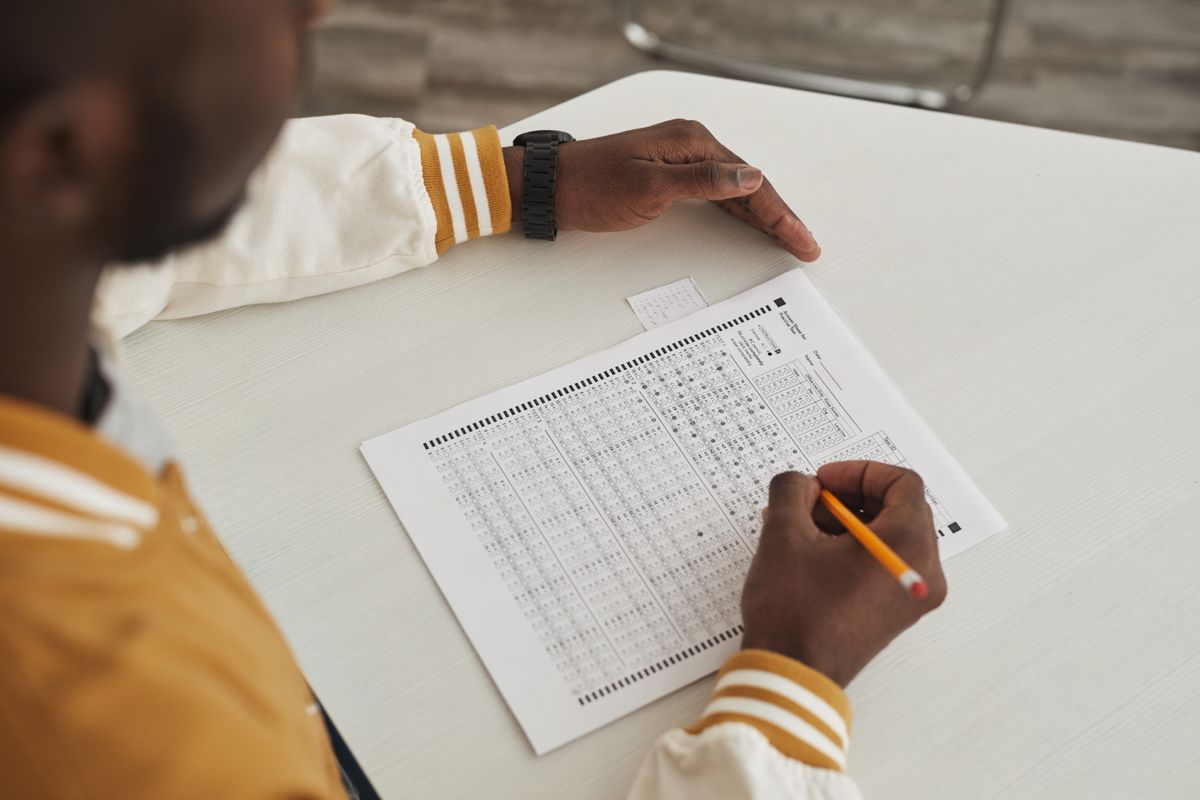
For more practice, use the BISE Hyderabad past papers guide for exam technique, check the BISE Karachi past papers guide, and browse past papers on PakUni for later study. For official model papers, dates and announcements, check the official BISE Sukkur website, because only the board can confirm a change. Start with one paper today, and let your next paper be better than your last.