AIOU Handwritten vs Typed Assignments: What Is Allowed and What Tutors Actually Prefer
AIOU handwritten vs typed assignments: ask a room of new AIOU students what worries them most and this question always appears: “Do I have to write assignments by hand, or can I type them?” The honest answer is that AIOU has no single answer for every programme — the requirement sits inside your course instructions and your submission route. But there is a clear pattern, and once you understand it, the choice becomes simple. This guide to AIOU handwritten vs typed assignments explains when handwriting is expected, when typing works, and — more important than either — what tutors actually reward when they mark.
Start with the traditional picture of AIOU handwritten vs typed assignments. For most tutor-marked AIOU assignments, handwriting has been the standard expectation for decades: the student writes answers by hand on assignment sheets, attaches the cover page, and submits to the tutor by post or by hand. Handwriting is also quietly practical for the university — a handwritten assignment is visibly the student’s own work. Typed and printed assignments appear where programmes design for them, and a growing number of courses collect assignments as uploaded files through the Aaghi LMS, where the “file” can be a typed document or clear scans of handwritten pages.
AIOU Handwritten vs Typed Assignments: Quick Facts
| Item | Detail |
|---|---|
| Traditional standard | Handwritten assignments for most tutor-marked courses |
| Where files are uploaded | LMS-based courses accept an uploaded document or clear scans of handwritten pages |
| The deciding document | The instructions printed with your assignment and course material — they override general advice |
| What tutors reward | Correct, complete, well-organised answers in the student’s own words — in either medium |
| Golden rule | If your instructions specify a format, follow them exactly; if they do not, choose the medium you can produce most clearly |
AIOU Handwritten vs Typed Assignments: When Handwriting Is the Right Choice
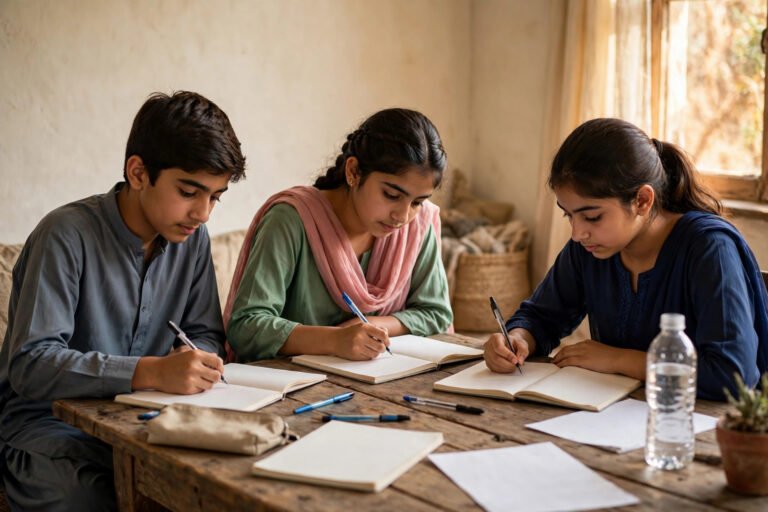
If your assignment is submitted to a tutor on paper, handwriting is the safe default — it is what tutors expect to receive, and it cannot be rejected as the wrong medium. Handwriting also forces a useful discipline: you cannot copy-paste, so answers are processed through your own understanding as you write. To make handwriting work for you rather than against you, write on one side of the paper, keep margins, use a pen that writes darkly, and slow down — a tutor facing a pile of assignments reads legible scripts generously and struggles through cramped ones. Structure still matters more than beauty: headings, underlines and numbered answers, as our assignment format guide sets out.
AIOU Handwritten vs Typed Assignments: When Typing Works Better
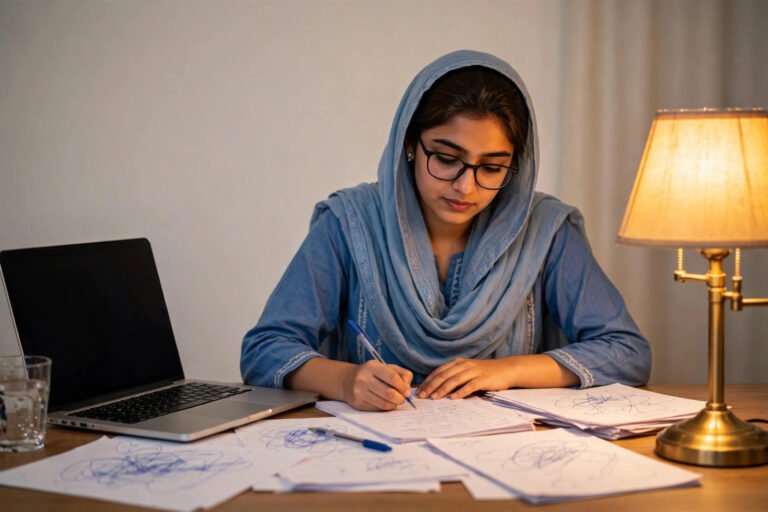
Typing earns its place in three situations. First, courses whose assignments are submitted through the Aaghi LMS, where a typed document uploads cleanly — our guide on uploading assignments on the Aaghi LMS covers that route. Second, students whose handwriting is genuinely difficult to read, in programmes whose instructions allow typed work. Third, long research-style assignments where editing matters: a typed draft can be restructured before the final version in a way a handwritten one cannot. If you handwrite for an LMS course, scanning quality becomes your presentation: scan in good light, page by page, in order, and check the file on your phone before uploading — a faint, tilted scan is the digital version of bad handwriting.
What Actually Decides Your Marks
Tutors mark content. The medium questions that reach PakUni usually hide the real anxiety — marks — so let us be direct: no tutor awards marks for typing, and none deducts them for neat handwriting. Marks follow whether you answered the question asked, covered the required points, organised the answer logically and wrote in your own words. A printed assignment copied from a downloaded file is the weakest submission of all, whatever it looks like, which is why our guide on using solved assignments for learning insists on studying from them and then writing your own answer. Choose the medium your instructions allow and your hand can produce most clearly — then spend your worry on the answers.
Common AIOU Handwritten vs Typed Assignments Mistakes to Avoid
The worst mistake in this whole area is printing a ready-made assignment and submitting it as your work: tutors recognise circulated material, and the risk to your result is real. Other common errors: typing an assignment whose instructions required handwriting, mixing media inside one assignment (part printed, part handwritten) which looks careless, and producing handwritten pages so faint or crowded that the tutor cannot read them comfortably. If your instructions are genuinely silent and your tutor is reachable, one short question to the tutor settles the medium for your whole programme.
Frequently Asked Questions
Can I submit a typed, printed assignment by post to my tutor?
Only if your course instructions allow it. Where instructions require handwritten work, a printed submission can be refused or penalised. When in doubt, handwrite for postal submission and save typing for LMS courses.
Can handwritten pages be uploaded to the LMS?
Yes — for LMS-based assignments, clear scans or photographs of handwritten pages assembled into a single readable file are a normal submission. Check the file opens correctly and every page is legible before the deadline, not after.
My handwriting is very poor. What should I do?
First check whether your programme allows typed assignments and use that permission if it exists. If handwriting is required, write slowly on lined paper with wide spacing, and structure answers with clear headings — legibility improves faster than style, and legibility is what the tutor needs.
Closing Note
Whichever medium you choose for AIOU handwritten vs typed assignments, study before you write: the AIOU solved assignments library on PakUni shows you course-wise material to learn from before you produce your own answers. And if your course instructions leave you unsure, ask students who have already taken the course in the PakUni Facebook group — this exact question is answered there every semester.
How to Decide: AIOU Handwritten vs Typed Assignments
Decide the medium before you write a single answer, because the choice shapes everything that follows. AIOU handwritten vs typed assignments are not a matter of taste alone; the right choice is the one your course instructions and your submission route allow. Read the assignment question paper first, look for a line about handwriting, typing, scanning or uploading, and follow that line exactly. If the paper says handwritten, write by hand, even if typing feels faster. If it says typed or uploaded, typing is safe.
When the instructions say nothing about the medium, look at how the assignment will reach the tutor. AIOU handwritten vs typed assignments sent by post to a named tutor are usually handwritten, because the tutor receives paper and marks it by hand. Assignments uploaded to the LMS can be either typed files or clear scans of handwritten pages, and the LMS accepts both. Check your tutor letter and your LMS course page for the same clue, and if the two disagree, follow the tutor letter and ask the tutor to confirm.
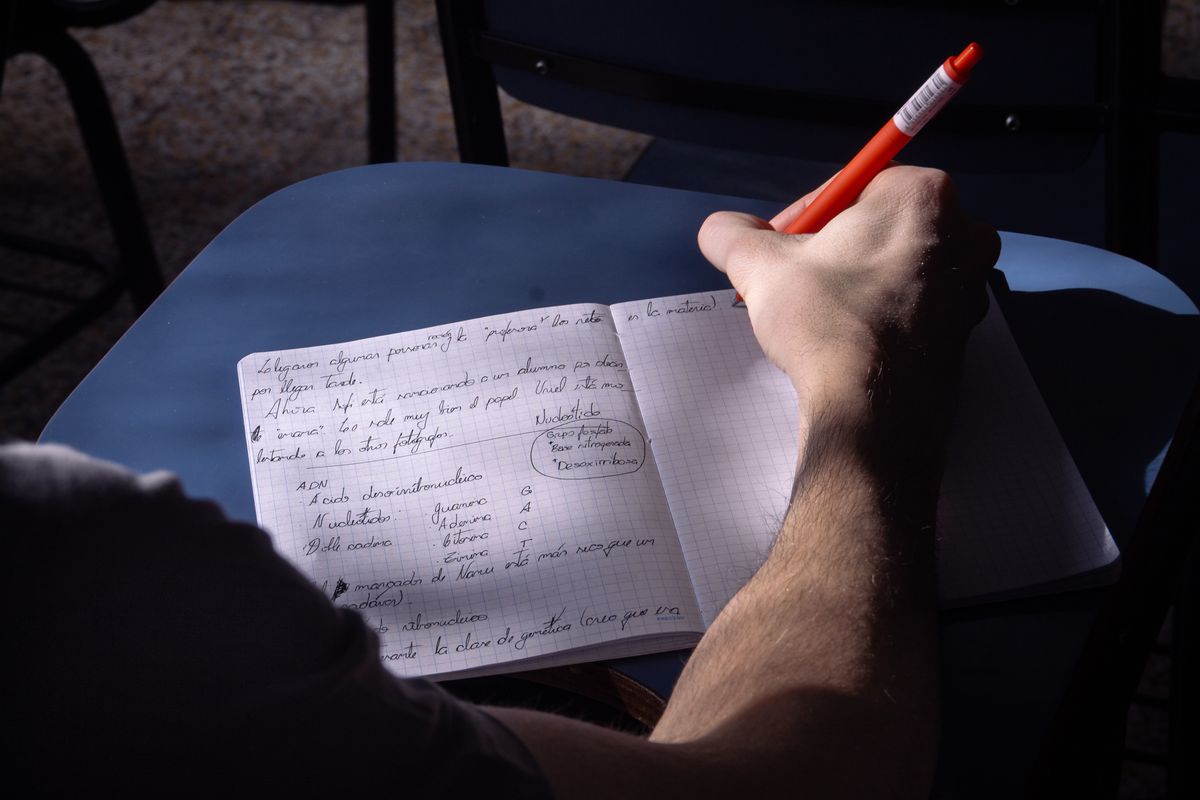
Think about your own writing as well, honestly and without pride. AIOU handwritten vs typed assignments both reward clear, readable work, so choose the medium in which your tutor can read every word without strain. If your handwriting is neat and steady, handwriting is fine. If your handwriting is hard to read even for you, typing will protect your marks, provided the course allows it. Tutors cannot mark what they cannot read, and they will not guess at a blurred or cramped line.
AIOU Handwritten vs Typed Assignments: Making Handwriting Neat
If you choose handwriting, treat neatness as part of the answer, not as decoration. AIOU handwritten vs typed assignments are marked on paper by a tutor who reads dozens of scripts, so a clean page with clear headings, even lines and wide margins is a gift to that reader. Write with a good blue or black pen, rule your margins, leave a line between paragraphs, and number each page at the top. If you make a mistake, cross it out once with a single line, write the correction above it, and move on. A tidy correction looks honest; a scribbled patch looks careless.
Write your answers in the order the questions are asked, and start each answer on a fresh page where you can. AIOU handwritten vs typed assignments both benefit from that order, because the tutor can follow your thinking without hunting for a missing part. Use headings for each question, underline the key terms in the question once, and keep your examples short and relevant to Pakistan, to a school or to a classroom you know. Long, copied passages from a book slow you down and add little to your marks, while a short example in your own words shows that you understood the unit.

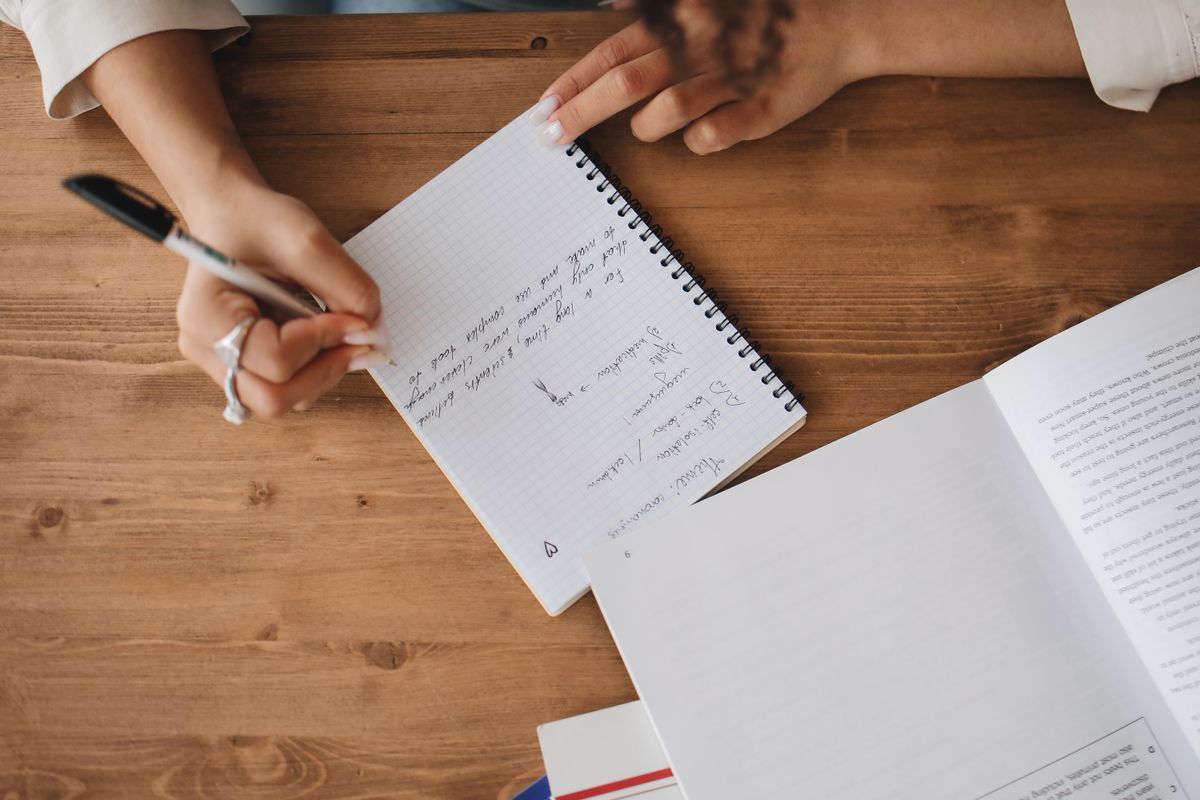
Scan or photograph handwritten pages in daylight, one page at a time, holding the phone steady above the page. AIOU handwritten vs typed assignments uploaded as scans must be readable at normal size, so check each image before you move to the next page. Crop out the table and the background, keep the page straight, and name the files in order, such as page one, page two and page three. Then assemble them into a single PDF in the right order, open the PDF once from start to finish, and only then upload it. A missing or upside-down page is a common and avoidable loss.
AIOU Handwritten vs Typed Assignments: Making Typing Work
If you choose typing, keep the file simple and easy for the tutor to open. AIOU handwritten vs typed assignments in typed form should be a Word document or a PDF with a clear font, a font size of twelve or fourteen, and headings that match the question numbers. Set your margins to one inch, use line spacing of one and a half, and put your name, roll number, course code and question number at the top of the first page. Save the file with your course code and part in its name, and keep a copy on your phone as well as on your laptop.
Type your answers in your own words, and use the same structure you would use by hand: a short opening line, two or three main points with examples, and a short closing line. AIOU handwritten vs typed assignments are not judged by how many words you can paste, and a long file copied from the internet will be recognised quickly. If you type a quotation, keep it short, put it in your own sentence, and name the source in simple words. Spell-check the file, read it aloud once, and check that every question you attempted is present before you upload it.
AIOU Handwritten vs Typed Assignments: Submission Checklist
Before you send anything, run a short checklist that covers both mediums. AIOU handwritten vs typed assignments both need your name, roll number, course code, part number and question numbers on the first page, and every question you attempted must be present in order. Check that no page is blank, no page is upside down, and no file is corrupted. If you are posting paper, use a strong envelope, write the tutor address clearly, and keep the postal receipt. If you are uploading, check the file size, the file name and the confirmation message after the upload.
Keep a copy of everything you submit, in the same form in which you submitted it. AIOU handwritten vs typed assignments can be queried later if a page goes missing or a mark looks wrong, and your copy is the only way to show what you sent. Photograph the posted envelope and the receipt, or save the uploaded PDF and the confirmation screenshot in one folder on your phone. Note the date, the course code and the tutor name beside each file, so you can find it in seconds if you need it.
What Tutors Actually Prefer in AIOU Handwritten vs Typed Assignments
Tutors prefer work they can read quickly and mark fairly, whatever the medium. AIOU handwritten vs typed assignments earn the same marks when the content is clear, the examples are relevant and the structure is easy to follow. A neat handwritten script with clear headings often scores better than a typed file full of copied text, and a clean typed file often scores better than a handwritten script that is hard to read. The medium does not add marks by itself; it only makes your content easy or hard to mark.
Ask your tutor if you are still unsure, and ask early, before the last date. A short message stating your course, your programme and the medium you plan to use will usually get a clear answer, and that answer is worth more than any general rule. Keep the reply with your assignment records, and follow it exactly. Tutors remember students who ask in good time, and they are far more patient with a question asked a week early than with a problem reported on the last evening.
AIOU Handwritten vs Typed Assignments: Your Next Steps
Your next step is to read your question paper, choose the medium it allows, and start writing in your own words today. AIOU handwritten vs typed assignments work best when you study the unit first, plan each answer with a heading and an example, and submit before the deadline. Do not copy a ready-made file, do not leave the work for the last night, and do not submit a file you have not read through once. A steady, honest answer in the right medium is the strongest choice you can make.
For more study help, browse the AIOU solved assignments page, practise with AIOU past papers, and learn how to check AIOU assignment marks on the CMS portal after you submit. For official rules, dates and announcements, check the official AIOU website, because only the university can confirm a change. Choose your medium, write clearly, keep your copy, and your assignment will reach your tutor in the best possible form.