
AIOU 8606 Solved Assignment Autumn 2026 – Citizenship and Community Engagement (B.Ed)
If you are studying B.Ed at AIOU, the aiou 8606 solved assignment autumn 2026 will test how well you link school life with community life. Course 8606 is about Citizenship and Community Engagement. It asks what a good citizen does, how schools and parents work together, and how students learn to serve their area. This guide gives you a solved sample for Autumn 2026 and explains what each typical question is really asking.
Use this page as a study sample for learning and reference. It is not a paper to copy. Read the sample, understand each idea, and write your own answers in your own words. Copied work can fail or lead to strict action by AIOU. You can find more solved work on our AIOU solved assignments hub.
Assignment Details at a Glance
| Course Code | 8606 |
| Subject | Citizenship and Community Engagement |
| Program | B.Ed |
| Semester | Autumn 2026 |
| Submission | Aaghi LMS (aaghi.aiou.edu.pk) |
| Deadlines | As per the published schedule. Confirm the dates on your own question paper and LMS account. |
| Assignments and Marks | As given on your official question paper. |
Assignment No. 1 – Questions and Solved Sample
Check the official question paper for Autumn 2026 before you write. The questions below are typical questions from the usual pattern and past papers. They are not a copy of your paper. Match them against your own official question paper first.
Q1. Define citizenship. Explain the rights and duties of a good citizen.
Citizenship means being a legal member of a country, with rights from the state and duties owed to the state and to others. Main rights are education, free speech, voting, and fair treatment under the law. Main duties are to obey the law, pay taxes honestly, respect others, and protect public property. A good citizen claims rights with care and performs duties with the same care.
Q2. What is community engagement? What is the role of a school in it?
Community engagement is the active link between a school and the people who live around it. A school is not an island. It serves the area, and the area helps the school. The school shares student progress, invites parents to meetings, uses local skills in lessons, and joins local efforts for health and cleanliness. Trust grows when the school door stays open.
Q3. What is civic responsibility? How can teachers build it in students?
Civic responsibility is the duty to care for shared life: shared rules, shared spaces and shared neighbours. Teachers can teach fair class rules, give students small duties such as class monitor, and rotate the duties. Talk about real issues, such as litter or road safety, and ask students for fair solutions. Lectures alone do not build civic sense. Daily practice does.
Q4. Why does parent involvement matter? How can a school increase it?
Children learn more when home and school send the same message. Parents who know the homework and test dates can help at home. A school can fix meeting times that suit working parents, send short messages in simple language, and share one clear aim per meeting. Answer parent concerns on time and with respect. Involvement means partnership, not only calls when there is a complaint.
Q5. What is the role of community resources in teaching? Give Pakistani examples.
Community resources are the people, places and materials in the local area that help learning. A local doctor can talk about health. A farmer can explain crops and seasons. Local craftspeople can show real skills. Lessons feel real, costs stay low, and students learn respect for local work. Plan the visit, fix the aim first, and follow up in class. A visit without an aim is just a trip.
Assignment No. 2 – Questions and Solved Sample
The second assignment asks you to apply citizenship ideas to real school and community problems. Use examples from towns and villages you know, and link each point to student learning.
Q1. How does a strong school and community link help both sides?
The link works both ways. The school gives the community educated children and help in local efforts. The community gives the school support, skills, and care for school property. For example, parents help with a repair drive, and the school opens its ground for a health camp. Students gain most: they see learning as part of real life. A similar sample, the AIOU 8601 solved assignment for Autumn 2026, shows how to link theory with real examples.
Q2. How do community service projects build responsible citizens?
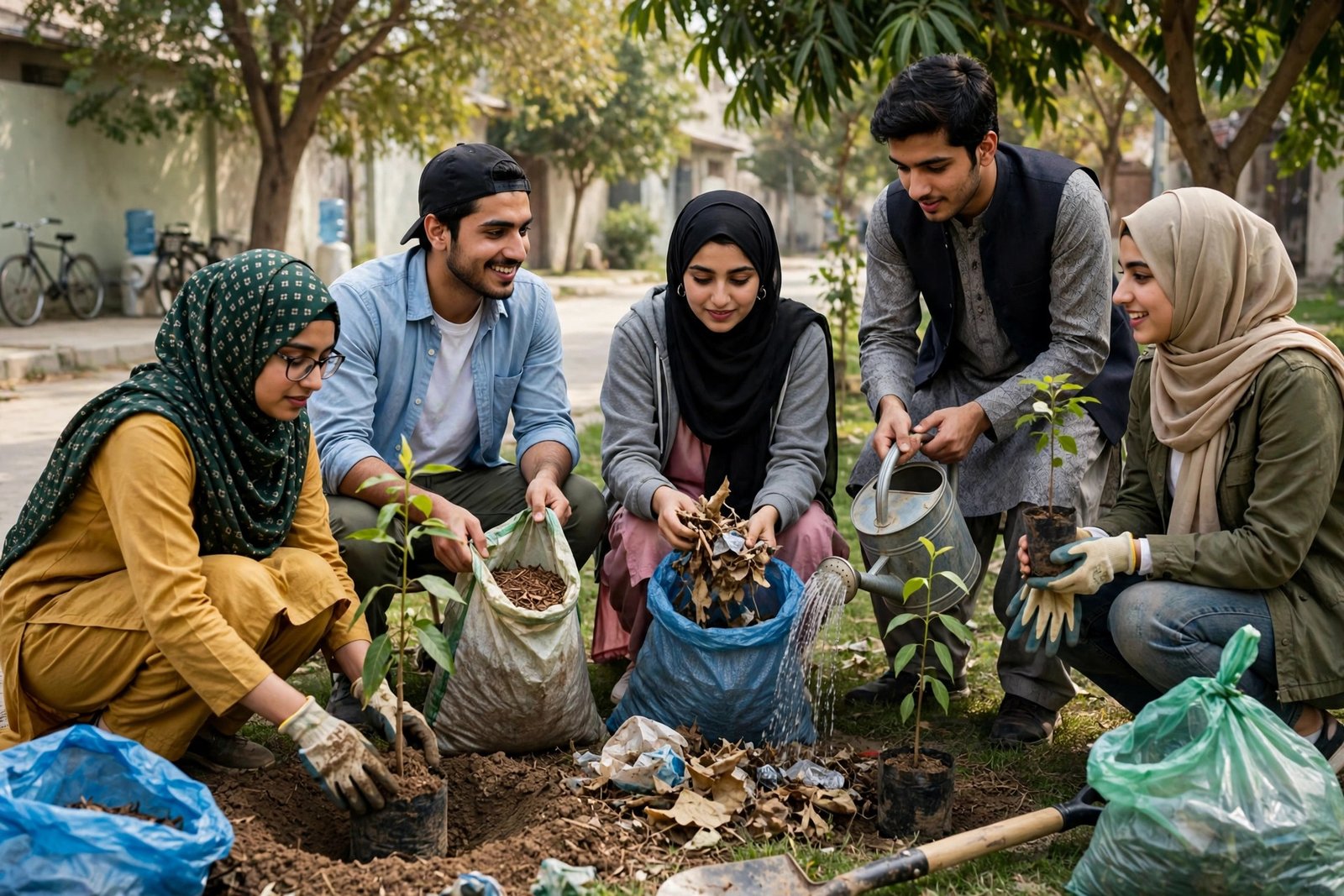
Social responsibility means care for the welfare of others and shared resources. A tree planting drive teaches care for the environment. A hospital visit teaches empathy. A book drive teaches sharing. Stress the learning step: plan, act, reflect, and share what was learned. Without reflection, a project stays a one day event. With reflection, it shapes habits.
Q3. What is the role of a teacher as a community leader?
In many areas, the teacher is one of the most trusted and educated persons. People seek advice on schooling and local issues. A teacher leader needs honesty, patience, fairness, good communication, and respect for all groups. For example, a teacher who helps parents fill forms and guides out of school children back to school earns trust. Such a teacher must serve all, not one group only.
Q4. What blocks community engagement in Pakistan? Suggest solutions.
Common blocks are low literacy, poverty and long work hours, distance from school, lack of trust, and weak school communication. Fix each one: use short voice messages for low literacy parents, fix meetings at suitable times, and use home visits for far off families. Keep promises small and deliver them on time. A small table of block and fix makes this answer clear and easy to mark.
Q5. Write short notes on: (a) active citizenship (b) volunteer work (c) school community partnership (d) civic education.
Write five to six lines on each. Active citizenship means taking part in community life and caring for shared rules. Volunteer work means giving time and skill without pay. School community partnership means a planned link between school and local people for shared aims. Civic education means teaching rights, duties and laws, so students can take part as adults.
How to Write Your 8606 Assignments Step by Step
Step 1: Read the official question paper. Get your questions from the AIOU website or Aaghi LMS. Never write from an old paper alone. Know the AIOU assignment submission rules for Autumn 2026 before you start.
Step 2: Make a short outline. Write the definition first, then the main points, then one real example, then a closing line.
Step 3: Use local examples. Real examples, such as a parent meeting or a clean up drive, show you understand the idea, not just the book words.
Step 4: Write in your own words. Read the sample, close the page, and write in your own simple sentences. Copied lines cost marks.
Step 5: Check upload steps early. Learn the process in the Aaghi LMS assignment upload guide before the last date. Test your login and submit early.
Step 6: Read your work once. Check spellings, check each question is answered, and keep a copy of your work.
A Quick Note on Academic Honesty
Solved samples are for learning and reference. They show the pattern and the points a tutor looks for. They are not for copying word for word. AIOU can mark copied work as zero, and repeated copying can lead to debarment. Learn the idea, then write it yourself.
FAQs – AIOU 8606 Solved Assignment Autumn 2026
Where do I find the official 8606 questions for Autumn 2026?
On the official AIOU website or in your Aaghi LMS account. Match the sample questions here against your own paper first.
Can I copy the solved sample answers?
No. Use them to learn the pattern. Write your own answers. Copied work can fail or lead to strict action.
How do I submit my 8606 assignments?
Through the Aaghi LMS at aaghi.aiou.edu.pk, as directed on your question paper and LMS account.
What if my paper is different from this guide?
Follow your own paper. Your official paper is the correct source for questions and marks.
Do I need real examples in every answer?
Not in every line, but one real example in most answers makes your work strong. Keep examples short and honest.
Is 8606 a scoring subject?
Yes, for students who write clear definitions, practical examples and a neat structure.
Final Words
Course 8606 is about being a good citizen and a good neighbour through your school. Use this sample to learn the pattern, add your own examples, and write honest answers in simple words. Submit on time through the LMS. Good luck with your Autumn 2026 semester.