Study in Denmark for Pakistani Students: Fees, Visa and Universities
Denmark is a small country with a large reputation for education. Danish universities are known for problem-based learning, close cooperation with industry, and strong programmes in engineering, life sciences, business and the social sciences. Denmark offers a high standard of living, safe cities, excellent public services and a society where English is widely spoken. Many Pakistani students choose Denmark for its quality of teaching, its international outlook and the chance to study in one of the happiest countries in the world. This guide explains the universities, the fees, the living costs, the student visa process and how to apply, step by step. This guide explains what to expect when you study in Denmark.
One point must be made clearly at the start. Tuition fees, living costs, deadlines and visa requirements change from time to time, and no date, fee or cost figure is stated in this guide. The exact fee for your programme, the amount of funds you must show, and the deadlines must be confirmed on the university’s official website and from the Danish Agency for International Recruitment and Integration. Any fee, deadline or cost figure you see on social media or a random website should be treated as a rumour until the university or the Danish authorities confirm it in their own announcement.
Quick Facts
| Item | Detail |
|---|---|
| Country | Denmark, Northern Europe |
| Main language | Danish; many master’s programmes and some bachelor’s programmes taught in English |
| Popular universities | University of Copenhagen, Aarhus University, Technical University of Denmark, Aalborg University, University of Southern Denmark |
| Popular fields | Engineering, life sciences, biotechnology, business, economics, social sciences, design |
| Tuition fees | Fees apply for students from outside the European Union and European Economic Area; confirm the current fee for your programme on the university’s official website |
| Student visa | A residence permit for studies, applied for through the Danish Agency for International Recruitment and Integration |
| Official sources | The university’s official website and the Danish Agency for International Recruitment and Integration |
| Dates, fees and deadlines | Announced for each admission round; no date, fee or cost figure is stated in this guide |
Why Pakistani Students Choose to Study in Denmark
Danish universities are known for a teaching style that is very different from rote learning. Students work in groups on real problems, often in cooperation with companies, and are expected to question, discuss and present their ideas. This problem-based approach builds the practical skills that employers value, and it is one of the reasons Danish graduates are in demand. Denmark is also a world leader in renewable energy, pharmaceuticals, food science and design, and students in these fields learn from researchers and companies at the cutting edge. That teaching style is one reason so many Pakistani students choose to study in Denmark.
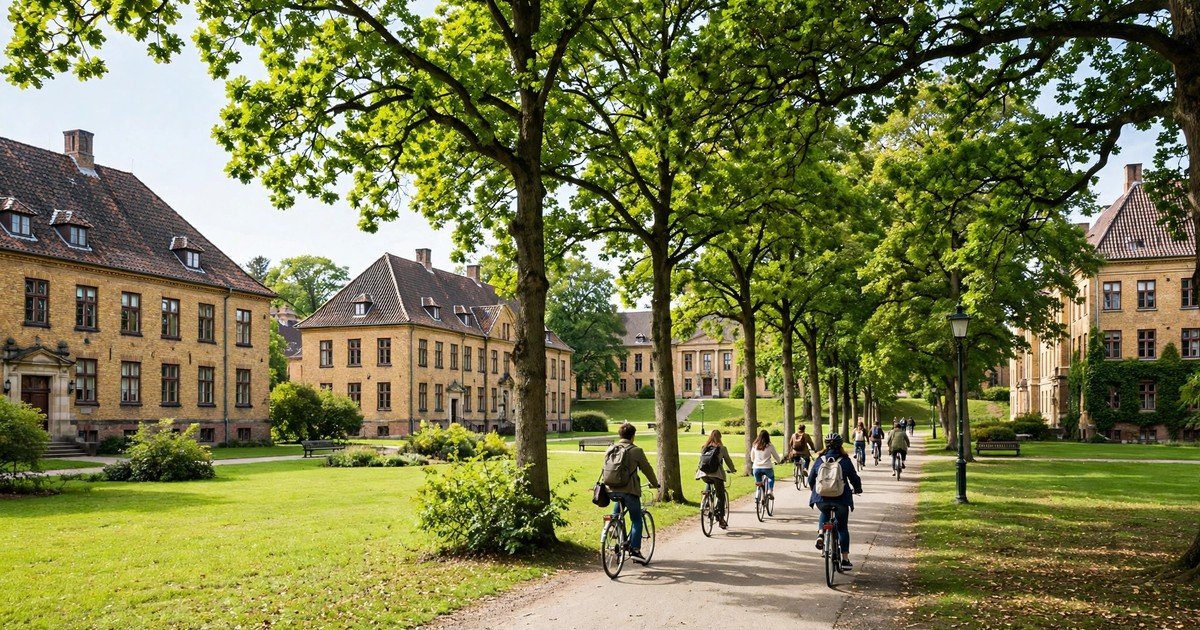
Life in Denmark is safe, clean and well organised. Cities such as Copenhagen, Aarhus, Aalborg and Odense are compact, easy to cycle around, and served by reliable public transport. English is spoken widely, especially by younger people and in universities, so daily life is manageable even before you learn Danish. Danish society values trust, equality and work-life balance, and international students are welcomed in university communities that include students from many countries.
Students in Denmark are allowed to work part time alongside their studies, within the conditions of their residence permit, and full time during holidays. Denmark has a strong economy with many international companies, and graduates may be able to stay to look for work under the rules that apply at the time. The exact work and post-study rules should be confirmed from the Danish Agency for International Recruitment and Integration before you plan around them. If you are comparing European destinations, our study in Germany guide explains another popular option for Pakistani students.
Universities in Denmark
Denmark’s best-known universities include the University of Copenhagen, Aarhus University, the Technical University of Denmark, Aalborg University, the University of Southern Denmark and Copenhagen Business School. Each has its own strengths. The University of Copenhagen is Denmark’s oldest and largest university, strong across the humanities, social sciences, law, medicine and natural sciences. Aarhus University is known for research in the social sciences, business and the natural sciences. The Technical University of Denmark, DTU, is the country’s leading engineering university, while Aalborg University is famous for problem-based learning. Copenhagen Business School is one of Europe’s leading business schools. These universities are the first choice for many Pakistani students who study in Denmark.
Most bachelor’s programmes in Denmark are taught in Danish, so undergraduate study usually requires Danish language skills. Master’s programmes, by contrast, are widely taught in English, and this is where most Pakistani students apply. English-taught master’s degrees are available in engineering, biotechnology, business, economics, public health, computer science and many other fields. Before you choose a programme, check the language of instruction and the admission requirements on the university’s official website.
Admission to a Danish master’s programme normally requires a completed bachelor’s degree in a relevant field, with good grades. Some programmes also require specific subjects, work experience or an English language test. Pakistani students usually need an English test such as IELTS or TOEFL, unless their previous degree was taught in English and the university accepts that as proof. Our IELTS preparation guide explains how to prepare for the test and what score to aim for.
Tuition and Living Costs
Tuition fees in Denmark apply to students from outside the European Union and the European Economic Area. The fee differs from one university and one programme to another, and it is set by each institution. Some universities offer scholarships that cover part or all of the tuition fee for strong applicants, and these are awarded at the time of admission. Because fees differ so much between programmes, you must confirm the current fee for your exact programme on the university’s official website, and never rely on a fee figure quoted on an unofficial website or in a social media post. Knowing the range helps you budget before you study in Denmark.
Living costs in Denmark are among the highest in Europe. Rent is usually the biggest expense, followed by food, transport and other daily costs. Copenhagen is the most expensive city, while Aarhus, Aalborg and Odense are more affordable. Students often reduce costs by living in student housing, cooking at home, cycling instead of using public transport, and using a student discount card. The Danish authorities require proof that you can support yourself during your studies, and the exact amount required is set by the authorities and should be confirmed from their official website.
Danish universities offer a limited number of scholarships for students from outside Europe, including tuition fee waivers and the Danish Government Scholarship, which is awarded to strong applicants from selected countries. Check the scholarship page of each university you apply to, and read our scholarships for Pakistani students guide for the kinds of support that are available in general.
Student Visa to Study in Denmark
Pakistani students need a residence permit for studies to live and study in Denmark. The application is made to the Danish Agency for International Recruitment and Integration, and it is normally started online. You should start the process as soon as you have your admission letter, because processing takes time and you should not book travel until the permit is granted.
The usual requirements for a student residence permit include an admission letter from a Danish university, proof that you can support yourself financially, proof that you have paid the tuition fee or have a scholarship, valid health insurance or coverage, and a valid passport. You will normally need to visit a Danish embassy or a visa application centre to give your biometric information and to show your original documents. The embassy or the immigration authorities will tell you the exact list of documents, and you should follow their instructions exactly.
Your residence permit is normally granted for the length of your programme, and it must be renewed if your studies take longer. After you arrive in Denmark, you must register your address with the local authorities and obtain a residence card. Keep copies of every document you submit, and keep your admission letter, your financial proof and your insurance safe, because you may need them again when you renew your permit. Never pay an agent who promises a guaranteed visa; the decision is made by the Danish authorities alone.
How to Apply to Study in Denmark
Applications to Danish universities are made through the university’s own admission portal for most master’s programmes, and through the national application system for bachelor’s programmes. Follow these steps when applications are open: Every applicant who wants to study in Denmark should follow these steps in order.
- Choose your programme and your university. Check the language of instruction, the admission requirements and the tuition fee for your exact programme on the university’s official website.
- Check the application deadline for your programme. Deadlines differ between universities and between bachelor’s and master’s programmes, and late applications are normally not accepted.
- Prepare your documents. You will usually need your matric and intermediate certificates, your bachelor’s degree and transcript if you are applying for a master’s, your English language test result, your passport, and a motivation letter or a CV if the programme asks for one.
- Get your documents attested and translated where required. Pakistani degrees often need attestation from the Higher Education Commission, and any document that is not in English or Danish may need a certified translation.
- Submit your application through the university’s portal or the national system. Fill in every section carefully, upload clear copies of your documents, and check that your name and date of birth match your passport exactly.
- Wait for the admission decision. Universities normally send the decision by email or through the portal. If you are admitted, you will receive an admission letter, which you need for your residence permit application.
- Apply for your residence permit as soon as you have the admission letter. Follow the instructions of the Danish embassy or the visa application centre, attend your appointment, and keep copies of everything you submit.
- Arrange your accommodation and your travel only after your residence permit is granted. Student housing is in high demand, so apply for it as early as the university allows.
If you face a problem with the application portal, contact the university’s admission office through the contact details on its official website. Do not pay anyone who offers to secure your admission or your visa for money; such offers are fraud.
Scholarships and Financial Support
Denmark offers a small number of scholarships for students from outside Europe. The Danish Government Scholarship is awarded by universities to strong applicants from selected countries, and it may cover tuition fees and living costs in full or in part. Some universities also offer their own tuition fee waivers and scholarships, which are awarded at the time of admission on the basis of academic merit. The details are published on each university’s website, and you should check them before you apply. Such support can make the decision to study in Denmark much easier for a family.
Pakistani students should also look at scholarships offered by the Higher Education Commission of Pakistan and by international bodies that support study in Europe. The Erasmus Mundus joint master’s programme, for example, funds study at several European universities, and some of its programmes include a semester in Denmark. Our Erasmus Mundus scholarship guide explains how that programme works. Apply for scholarships early, because their deadlines are often months before the university application deadline.
Common Mistakes to Avoid When You Study in Denmark
The most common mistake is applying for a bachelor’s programme taught in Danish without the language skills. Most bachelor’s degrees require Danish, so check the language of instruction before you apply. If you want to study in English, focus on master’s programmes, or plan to learn Danish first. Checking the official source is the safest habit for anyone who plans to study in Denmark.
The second mistake is applying late. Danish universities have firm deadlines, and a late application is normally rejected without being considered. Start preparing your documents months in advance, and submit your application well before the closing date.
The third mistake is underestimating the cost of living. Denmark is expensive, and the financial proof required for the residence permit is a real requirement, not a formality. Plan a realistic budget, arrange your funds honestly, and do not rely on part-time work alone to cover your costs in your first months.
The fourth mistake is submitting poor documents. Blurry scans, missing transcripts, untranslated certificates and names that do not match your passport can all delay or damage your application. Check every document before you upload it, and get attestations and translations done well in advance.
Is study in Denmark free for Pakistani students?
No. Students from outside the European Union and the European Economic Area pay tuition fees at Danish universities. The fee differs by university and programme, and it must be confirmed on the university’s official website for your exact programme. Some universities offer scholarships and tuition fee waivers for strong applicants. That fee is one reason Pakistani students choose to study in Denmark.
Which universities in Denmark are best for Pakistani students?
The University of Copenhagen, Aarhus University, the Technical University of Denmark, Aalborg University and the University of Southern Denmark are the best known. The right choice depends on your field: DTU for engineering, Copenhagen for a broad range of subjects, Aalborg for problem-based learning, and Copenhagen Business School for business.
Do I need IELTS to study in Denmark?
Most English-taught programmes require proof of English, usually through IELTS or TOEFL. Some universities accept a previous degree taught in English as proof instead. The exact requirement is set by each university and programme, so check the admission page of the programme you are applying to.
How do I get a student visa for Denmark from Pakistan?
After you receive an admission letter from a Danish university, apply for a residence permit for studies through the Danish Agency for International Recruitment and Integration, via the Danish embassy or a visa application centre in Pakistan. You will need your admission letter, proof of funds, proof of tuition fee payment or a scholarship, health insurance and a valid passport, and you will attend an appointment to give your biometric information.
Can I work while studying in Denmark?
Yes, students are normally allowed to work part time alongside their studies, within the conditions of their residence permit, and full time during holidays. The exact conditions are set by the immigration authorities and should be confirmed from the Danish Agency for International Recruitment and Integration before you plan around them.
Closing Note: Study in Denmark for Pakistani Students
Study in Denmark offers Pakistani students a high quality education, a safe and well organised society, and a degree that is respected across Europe and beyond. The main challenges are the tuition fees for students from outside Europe, the high cost of living, and the need to plan well ahead. Choose your programme carefully, confirm the current fee and deadline on the university’s official website, prepare your documents early, and apply for your residence permit as soon as you have your admission letter. With honest planning and timely preparation, Denmark can be an excellent choice for your studies. With good planning, the decision to study in Denmark can open doors to a strong career.
Academic honesty note: apply only through the official university portal and the official immigration channels, and never pay anyone who promises admission, a scholarship or a visa for money. Sit your own English test, submit your own documents, and trust only the official announcements for fees, deadlines and visa requirements.
Study in Denmark: Final Checklist for Pakistani Students
Use this checklist in the final week before you apply, because a careful last review can save you from a rejected application to study in Denmark. First, check that your passport is valid for at least eighteen months and that your photographs meet the size the embassy asks for. Second, confirm that your matric and intermediate certificates are attested, and keep scanned copies ready for the online form. Third, read the university document list one more time and tick off each item as you upload it, because the admission team that handles your study in Denmark application checks every document, and a missing paper can delay your offer by weeks.
Finally, note the closing date in your calendar and submit at least three days early, so a slow connection or a portal error cannot make you miss the deadline for your plan to study in Denmark. In short, a calm final check is part of a strong application to study in Denmark.
Money planning matters as much as admission when you study in Denmark, so build a simple monthly budget for your study in Denmark before you travel. Include rent, food, transport, books and health cover, and keep an emergency amount aside for the first month, because settling in always costs more than expected. Many students who study in Denmark also ask about part-time work, but you should first learn the rules for student work, since working without permission can harm your visa status.
As a result, treat your scholarship or family support as your main income while you study in Denmark, and treat any extra work as a bonus, not a plan. In short, a clear budget keeps your focus on your degree, and it keeps your study in Denmark journey free from money worries.
After your visa is stamped, plan your arrival for your study in Denmark the same way you planned your application to study in Denmark. Book your flight early, confirm your university accommodation before you leave Pakistan, and carry the address and phone number of your university contact in your hand luggage. In your first week, register with the university, open a local bank account if you need one, and buy a local SIM card so your family can reach you.
Students who study in Denmark often say the first month feels busy, so give yourself time to settle, join one student society, and ask senior Pakistani students for advice. Finally, keep your documents safe and keep copies online, because a calm start makes the rest of your study in Denmark experience much easier.